
The large fortress currently known as the Citadel was built in the mid-16thcentury. Although the work was initially commissioned to the engineer Luis Pizaño, the definitive design is by his successor, Gian Battista Calvi. It is a pentagonal fortress, equipped with five bastions that receive the names (from west to east) of Sant Joan, Sant Jordi, Sant Andreu, Sant Jaume, , and Santa María. The bastions are, in reality, large platforms for deploying defence artillery. The most important thing in this type of fortress is that the distance between the different elements must allow the cannons and the defenders’ weaponry to cover the entire perimeter, leaving no blind spots through which the attacker can penetrate.
It was not until a century later that a second ring of exterior defences began to be built, consisting of structures that technically receive the names of half-moons and ravelins, intended to hinder the attackers’ approach.
The name Citadel actually defines a fortress located next to a population to protect or control it. Initially, this was not the case for Roses, as it was a fortress that enveloped the town. It was as from 1645, when the medieval town was abandoned and the current town of Roses was built, that the French began to call the old fortress Citadel.
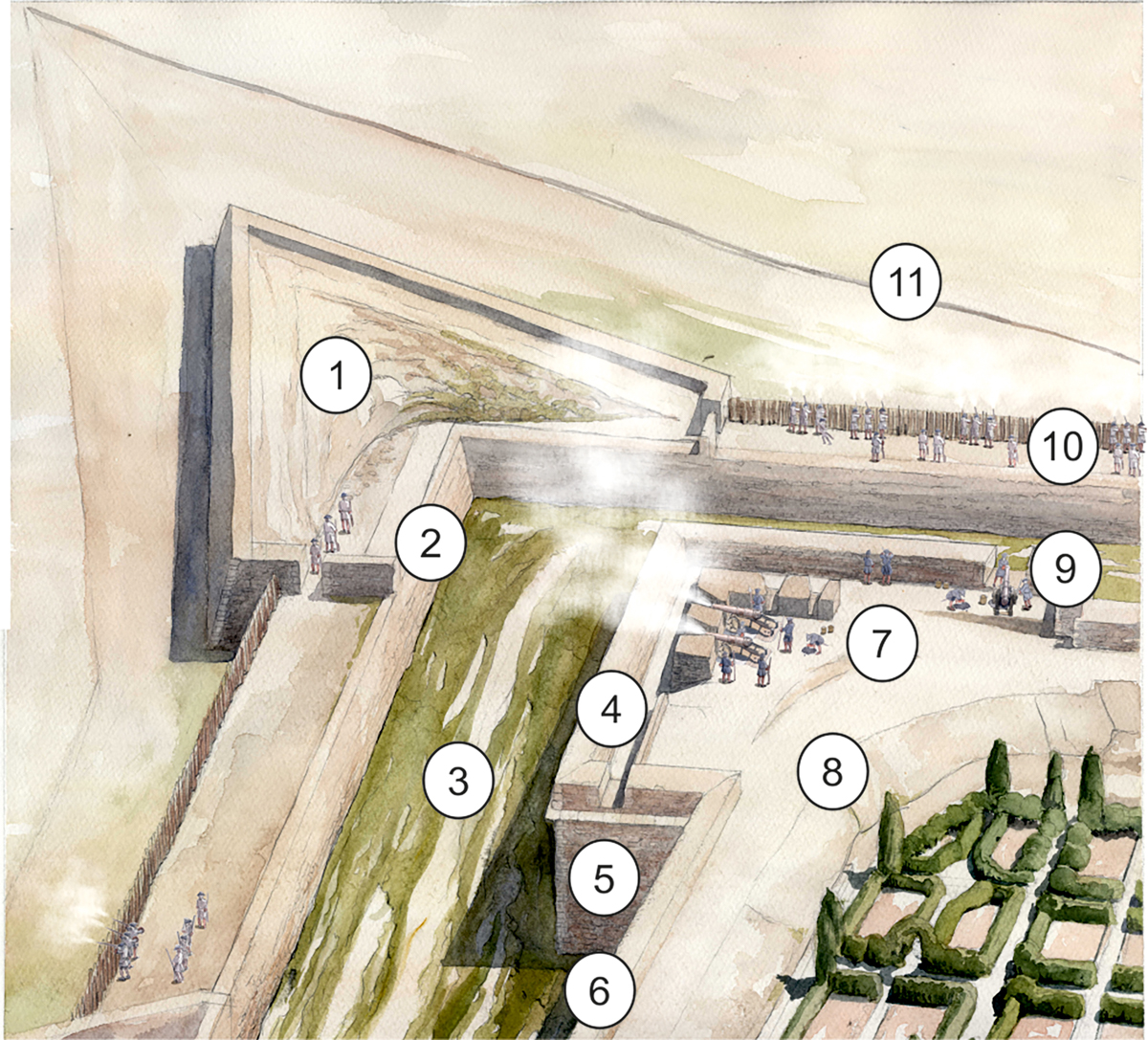
Source: J.Sagrera.
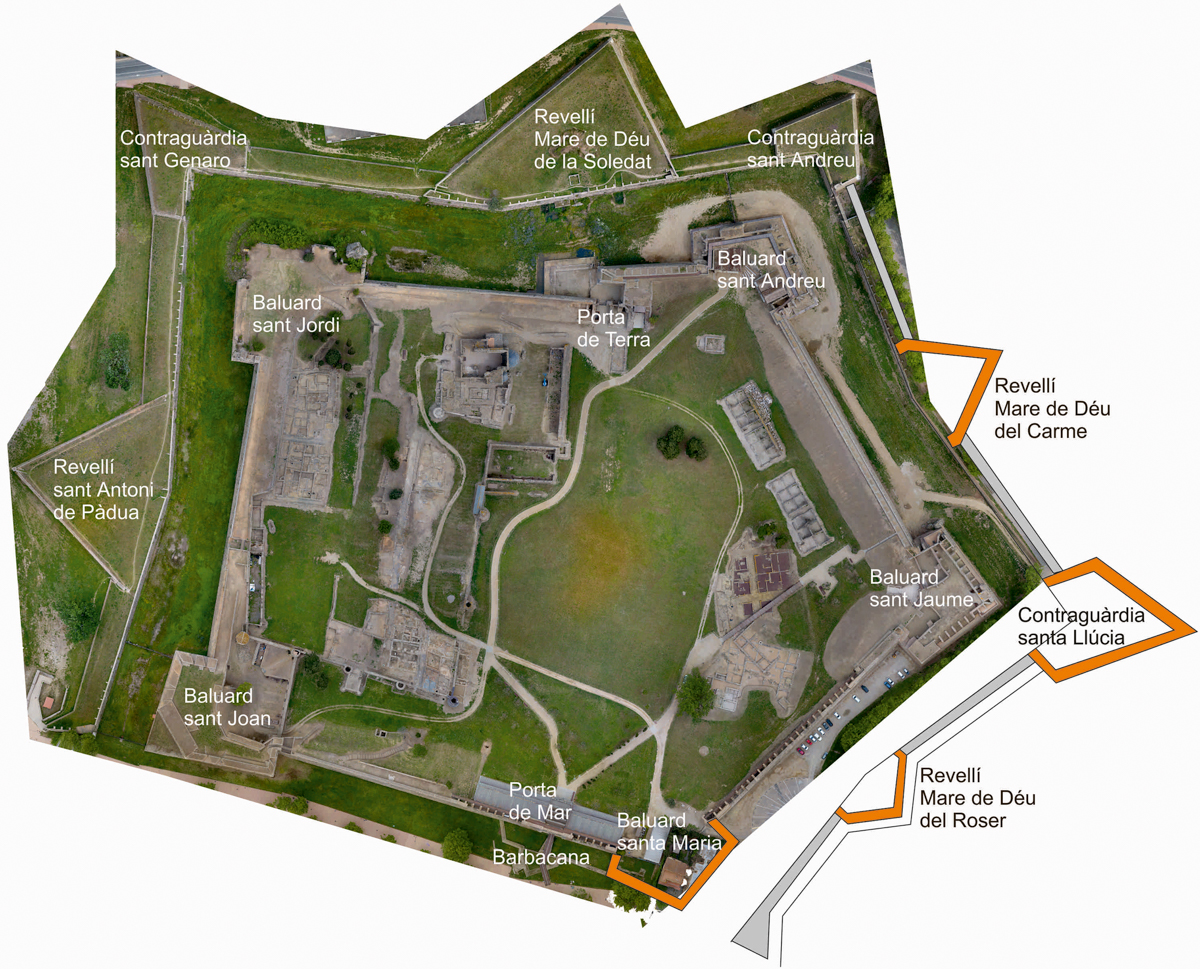
Source: CRAPA.
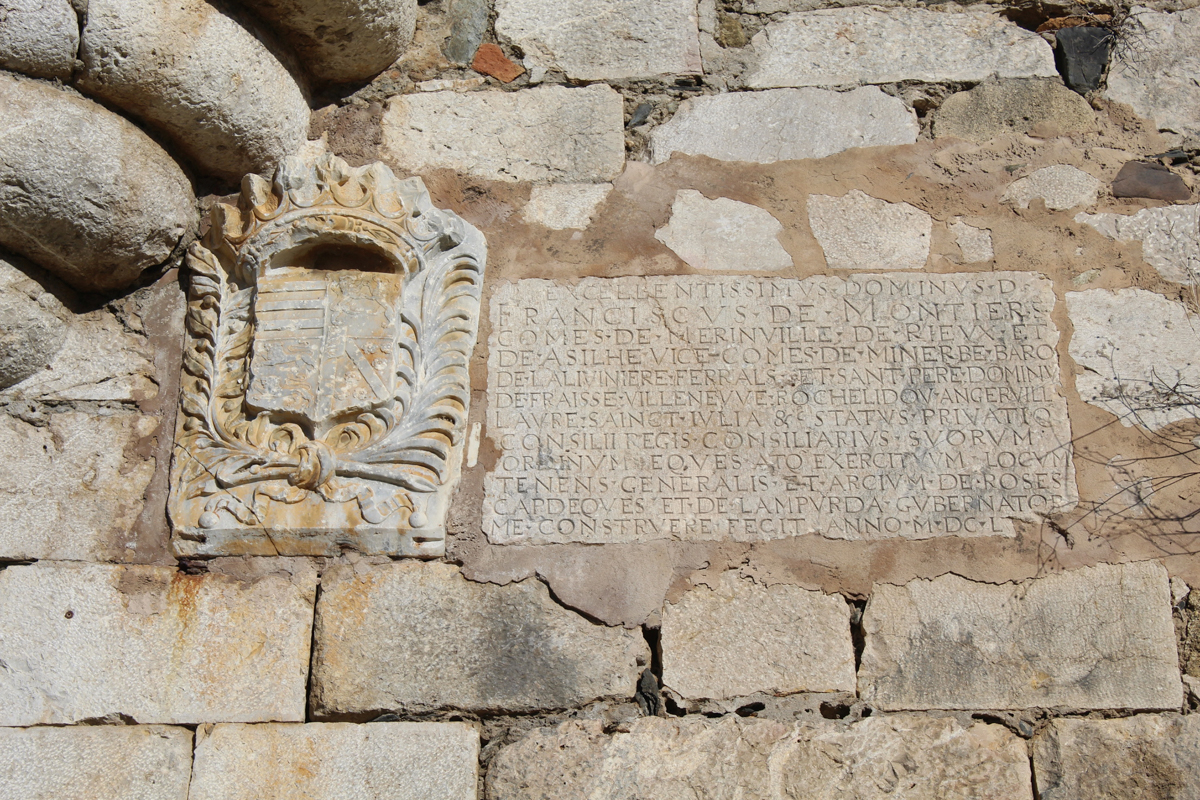
Source: CRAPA.