
Around the year 195 BCE, the Greek colony of Rhode was abandoned. Archaeological work seems to indicate that the coastal area was abandoned or occupied by a very dispersed and small population. In contrast, the remains of sunken ships in the Cap de Creus area and the materials found in the bay make it clear that the beaches of Roses continued to be used as an anchorage for ships that were still travelling along the commercial routes of the western Mediterranean.
Source: CRAPA.
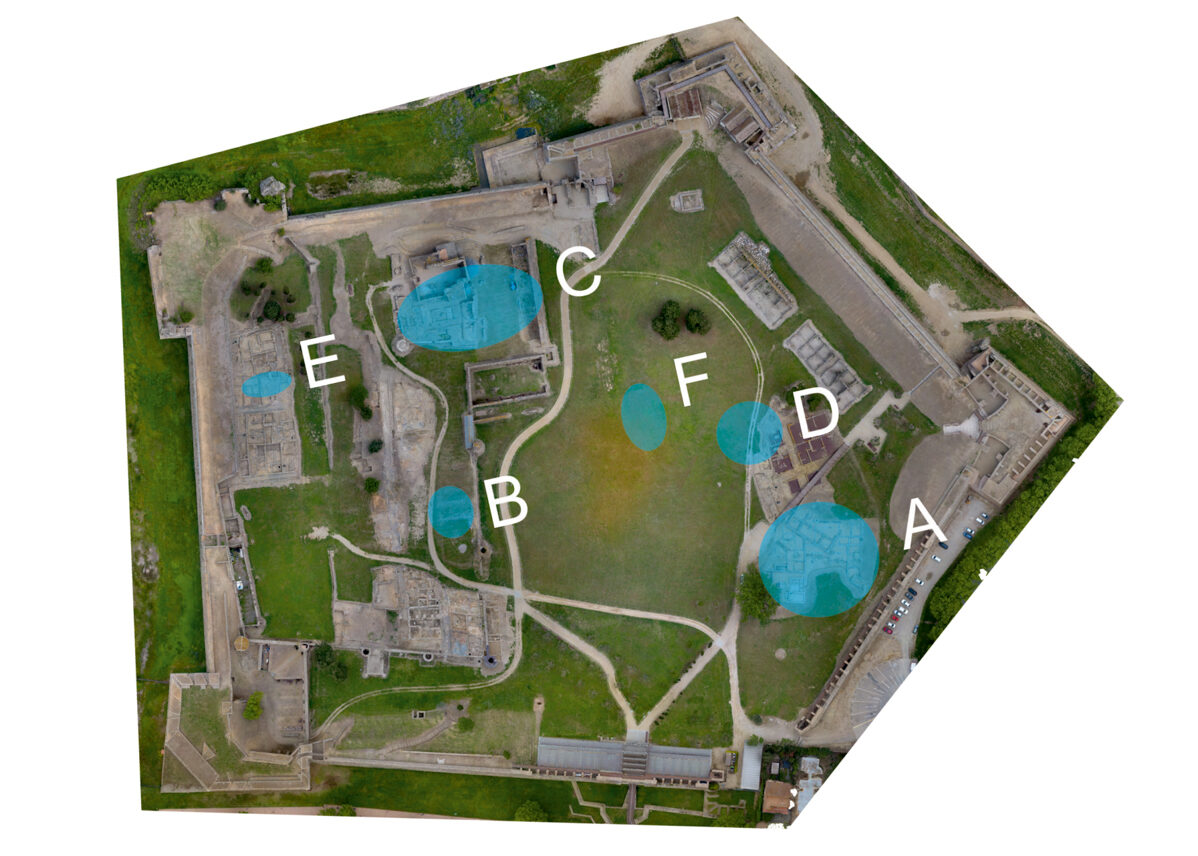
The archaeological data allow us to establish that it was from the 2nd century CE, that is, about four hundred years after the abandonment of the Greek colony, when a new settlement of a considerable size was built in the beach area. It is very likely that a Roman vicus was built, which we could equate with a small town today, and of which we currently know only three buildings. Of one of the buildings, we basically only know some walls, while the other two are clearly constructions with industrial and commercial functions. All of them are built on the beach (A, B of figure 1) and one had small public baths (thermae) in the 2nd century (A). Thermae are a type of building commonly found in all Roman towns and were especially relevant in port neighbourhoods, as they allowed sailors and travellers to wash and relax. The engineer responsible for the construction of the Citadel fortress (16th century)—Gian Battista Calvi—relates how, when building the foundations of one of the bastions (the Sant Jaume one), he found a set of walls and mosaics, which he interpreted as parts of another thermal complex.
This small settlement, always closely related to the sea through fishing and trade, progressively grew. Archaeological work has made it possible to determine how, in the 4th century, the old bathhouse (A) was transformed into a salting factory (File 1) and, at the same time, another one was built in the building located to the west (B). These are industries dedicated to processing fish to manufacture preserves and sauces.
Source: CRAPA.
The archaeological work has allowed the recovery of thousands of fragments of ceramic containers (amphorae) and tableware pieces from all over the Mediterranean, from the south of the Iberian Peninsula and North Africa to the Greek area and the Near East. More than a thousand Roman-era coins have also been recovered. All these elements tell us about the commercial importance of the Roses establishment in Roman times and its insertion into some of the most important commercial routes of the Mediterranean.
Another construction of great relevance must be added to the industrial buildings located. In the upper part of the hill (under the Santa María monastery), the remains of a small funerary church (cella memoriae) are preserved, which was probably built in the 4th century (C).
Source: CRAPA.
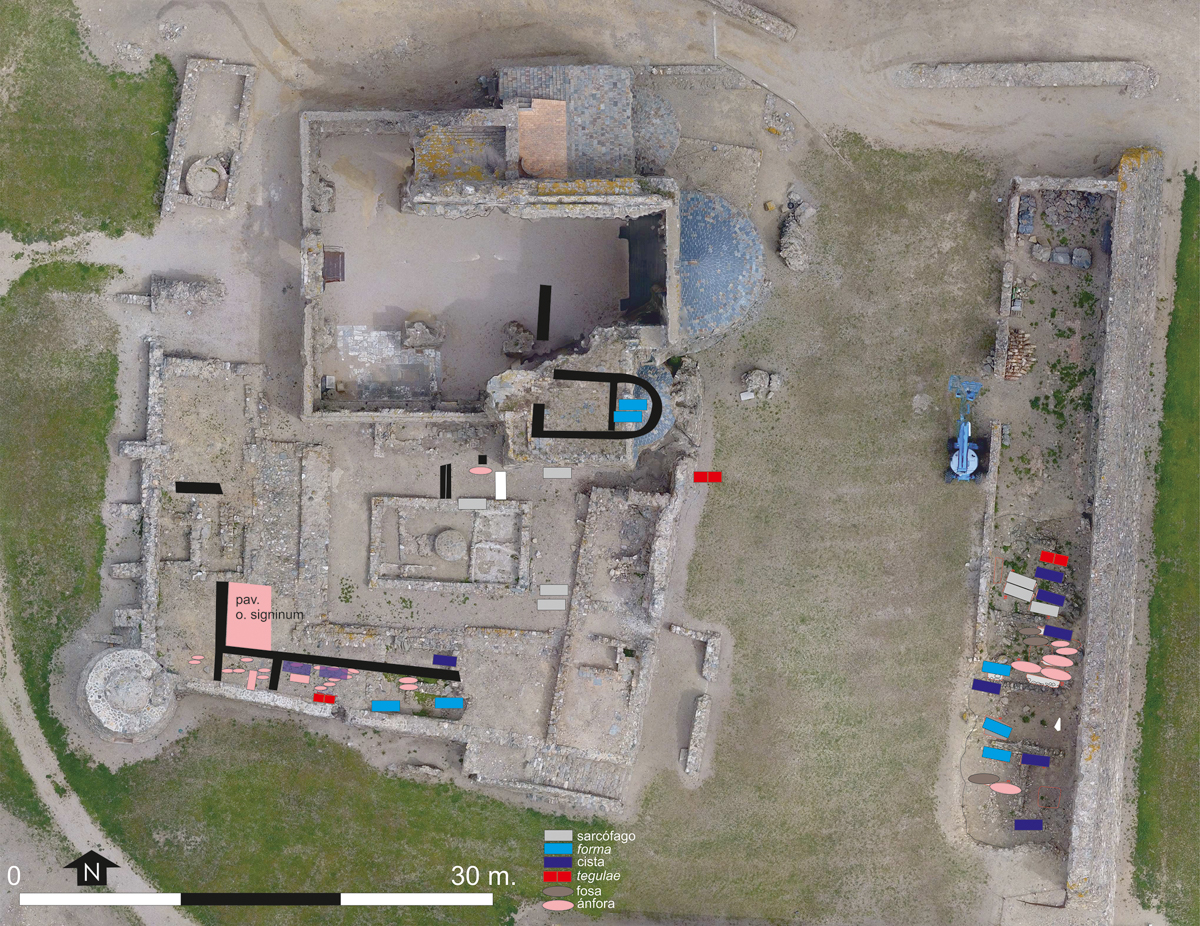
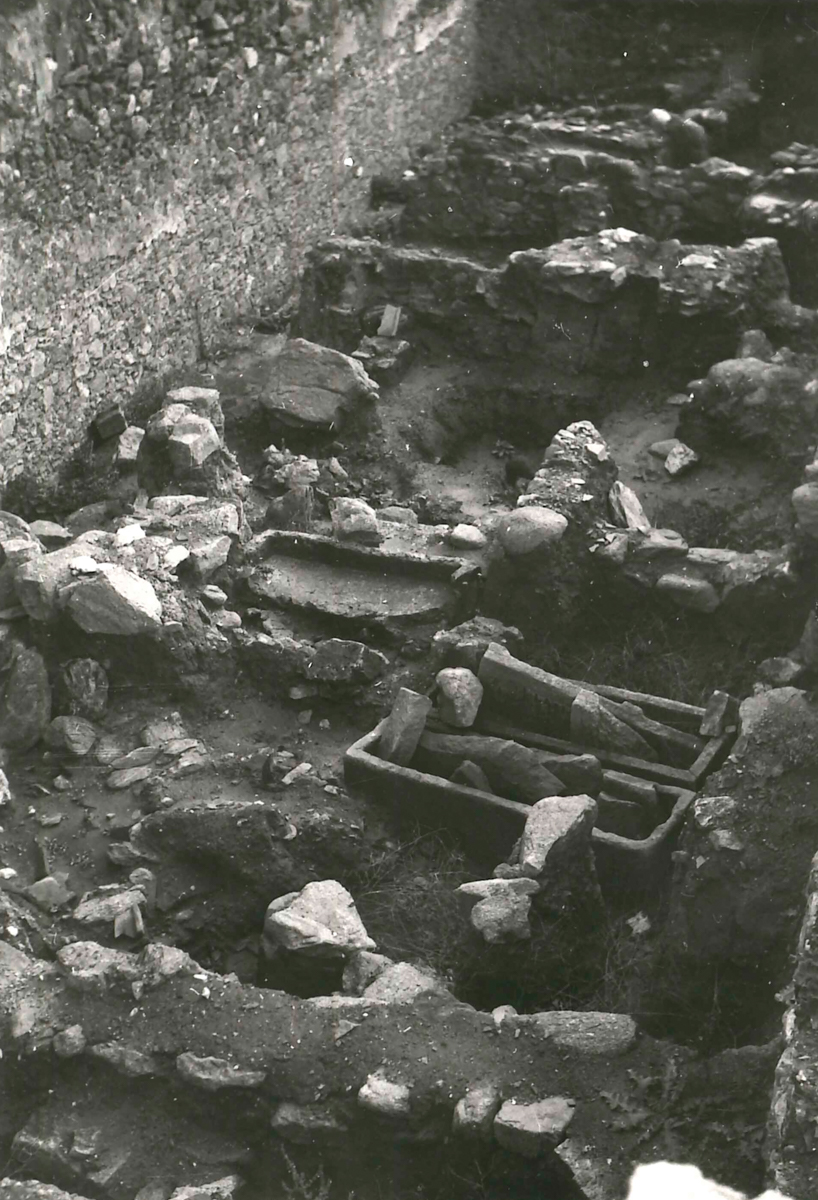
The archaeological excavations carried out in the mid-20th century made it possible to identify the chancel and part of the nave (located under the south apse of the current church). Other works carried out in recent years have confirmed that this building forms part of a much more extensive funerary complex that occupies almost the entire surface of the current monastery.
Around it is a large cemetery that extends along the eastern slope of the hill, the entire eastern area of the current fortress (D) and continues even further.
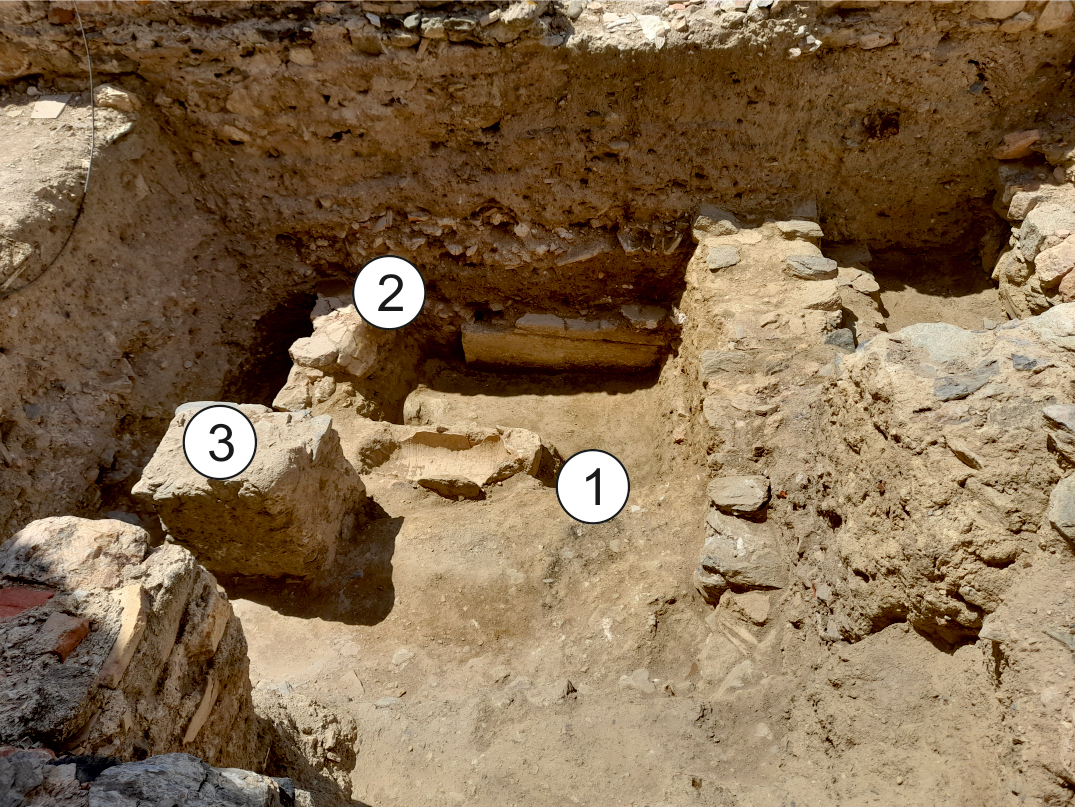
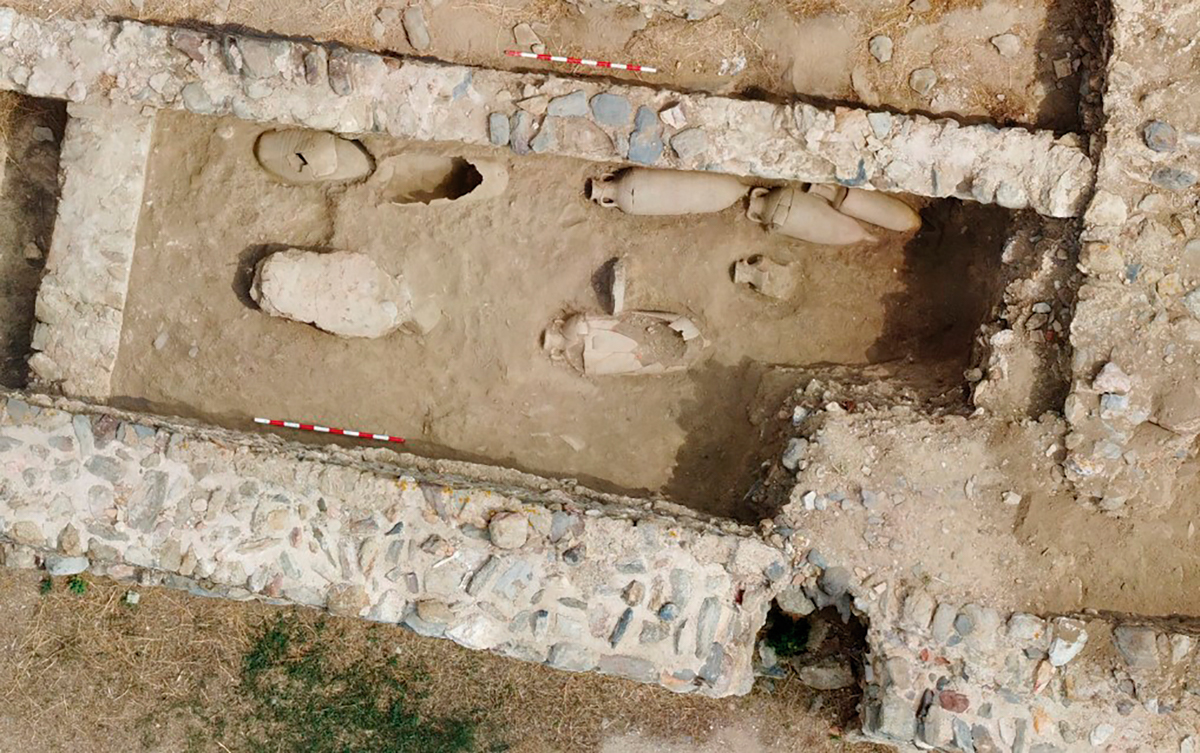
The excavations have made it possible to locate more than a hundred tombs of all kinds, from large stone sarcophagi to simple pits dug into the ground, including box-shaped tombs with stone walls or slabs (cistas) and burials inside amphorae. Historical chance has made it possible to know the name of one of these ancient inhabitants of Roses through a funerary inscription: it is a child named Maximus who died at only one year and six months of age.
Until recently, it was believed that after the prosperous period of the 5th and 6thcenturies, the vicus of Roses had been completely abandoned. Archaeological excavations carried out in recent years have shown us that, at least in the 6th-7th centuries, people still lived in the area, although in a different way. The fall of the Roman Empire and the arrival of the Visigoths led to changes in the way society lived and organised itself.
Source: MAC-Girona.
The old buildings with stone and mortar walls were abandoned and destroyed, some after a fire that we do not know whether it responds to some violent or accidental event. A new town was built with more modest buildings, with stone walls bound with clay, and which we are getting to know increasingly better. Some of the new constructions were built on the remains of the old industrial buildings (A.B), but they also extend along the slopes of the hill (E) and the lower area, the current parade ground (F). What did continue to be used were the church and the cemetery, which even grew in extension, reaching parts of the western slope of the hill . The discovery of ceramic pieces from outside the territory shows how trade with areas throughout the Mediterranean continued, although with less intensity and on a much more limited scale.
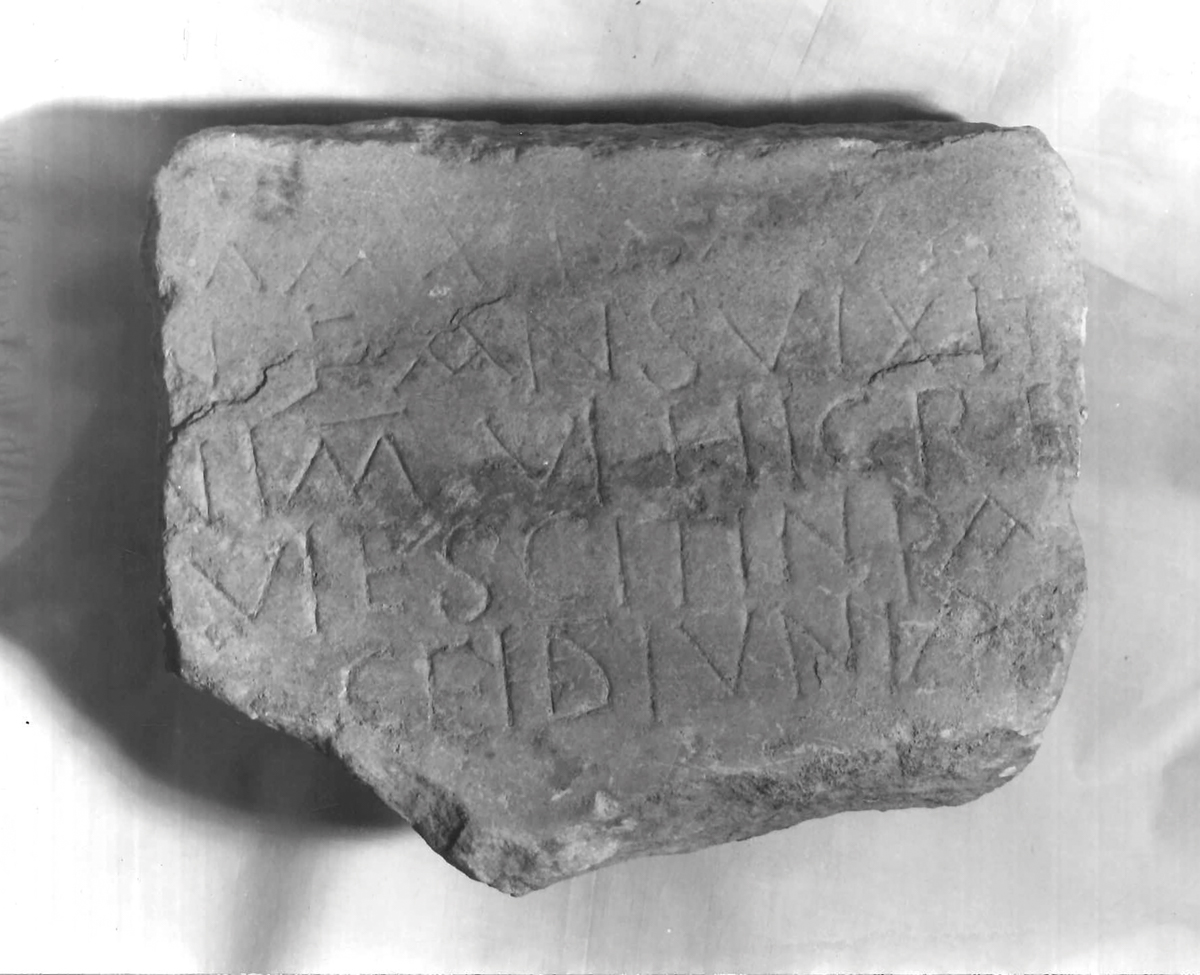
Source: MAC-Girona.
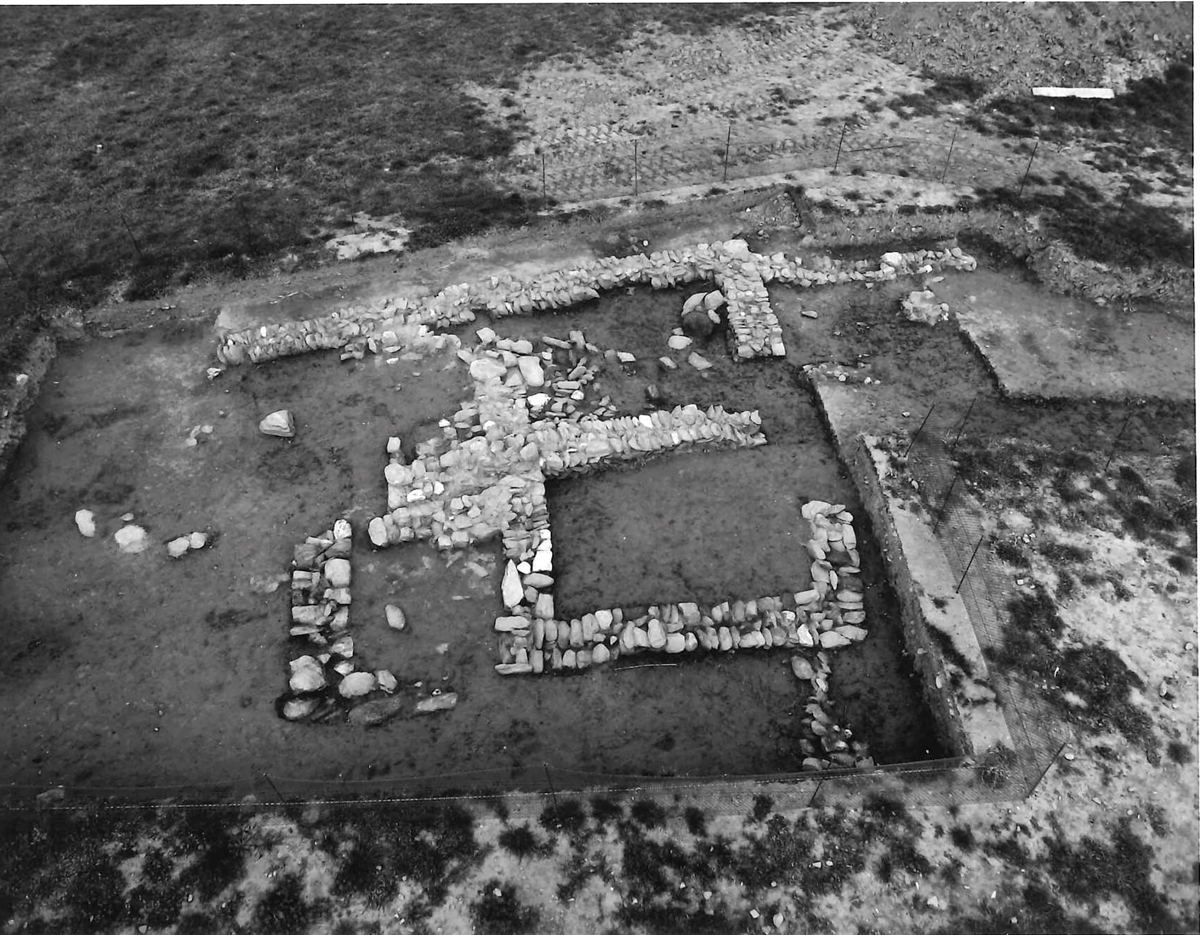
Source: Manel Casanovas, MAC-Girona.
| Burials in Amphorae
One of the peculiarities of cemeteries in the Roman era, especially as from the 3rd century, is burial in amphorae. It was sectioned at the top or the base, the body was deposited inside, and it was closed again, as if it were a small coffin. This type of tomb was widely used for children, but adults could also be buried in this way (in these cases, two or more amphorae were usually used). Almost all the amphora tombs in Roses are of children, and it should be noted that most of them have been located under the south wing of the monastery cloister, in a space that seems to have been reserved for this type of burial for a time.
|
For further reading
Bouzas, M. & Palahí, Ll. (2024). Roses de la tardoantiguitat a l’època medieval. In M. Bouzas & Ll. Palahí (eds.), De la tardoantiguitat a l’alta edat mitjana: una visió arqueològica, MonCRAPA, 1, pp. 199–212. Girona: Documenta Universitaria. https://www.documentauniversitaria.media/omp/index.php/crapa/catalog/book/moncrapa-1
Bouzas, M., Casas, J. & Nolla, J. M. (2025). Les àmfores de la Ciutadella de Roses (Alt Imperi, Baix Imperi i Antiguitat Tardana). MonCRAPA, 2. Girona: Documenta Universitaria. https://www.documentauniversitaria.media/omp/index.php/crapa/catalog/book/348
Pujol, M. & Carreras, C. (2002). L’ancoratge i el port de Rhode (Roses, Alt Empordà). Empúries, 53, 131–154. https://raco.cat/index.php/Empuries/article/view/95651/298051