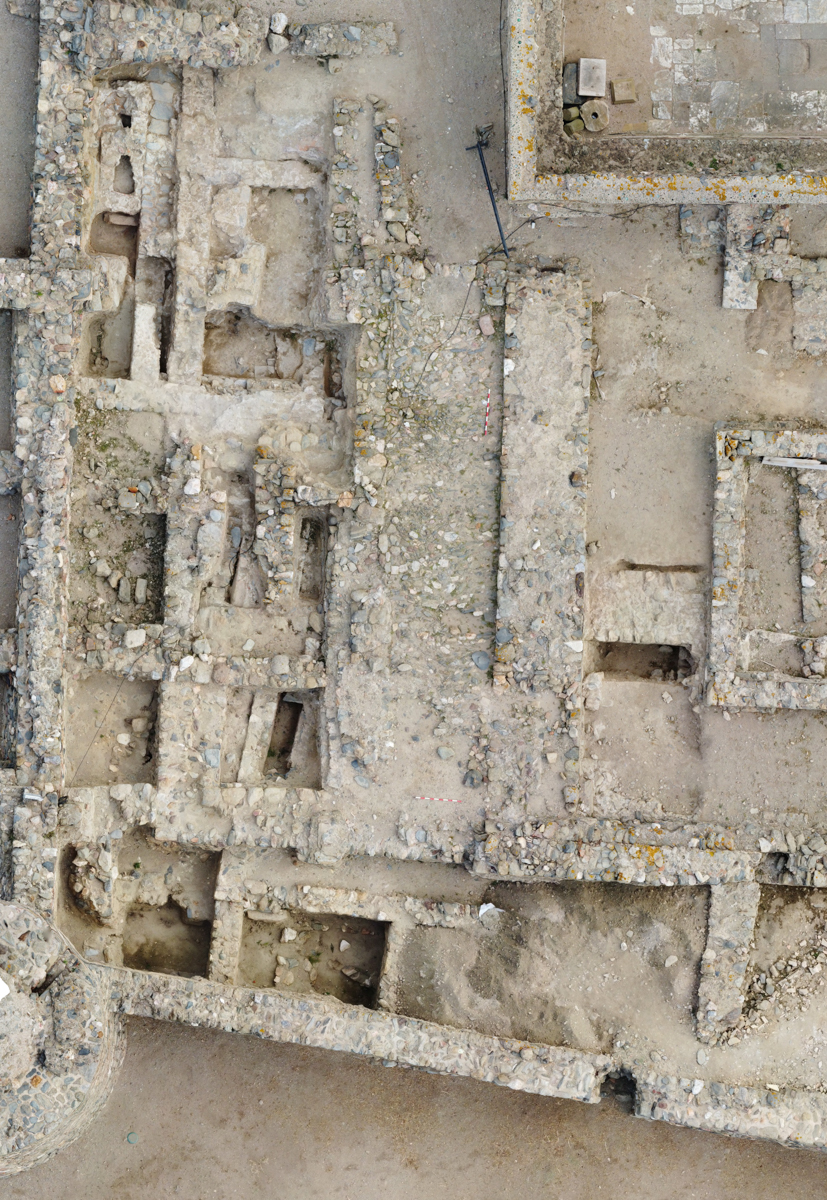
The patio or cloister is located south of the church. The visible elements currently correspond to the last moments of the monastery’s existence. Little is known about its original structure, which was probably not very different.
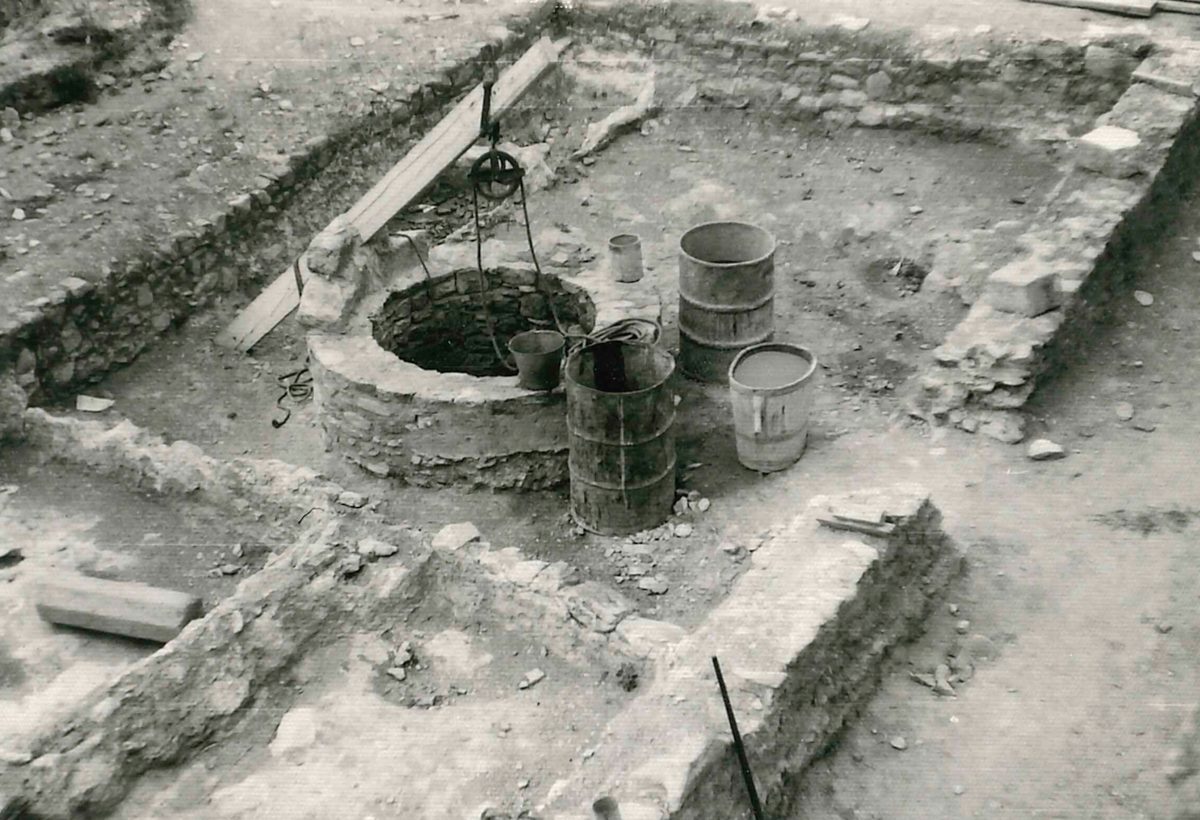
It is a small rectangular courtyard, ten by six metres, with a central well and surrounded by irregular corridors (galleries) (between two and three metres wide). In the north, it faces the church itself, while on the other three sides, different rooms and spaces are arranged that use the wall as their outer limit.
Each one of the galleries initially had three rooms. In the west wing, there was a small alleyway that would give direct access to this section from the monastery gate. Perhaps it was a space where local people could enter to run errands without disturbing monastic life.
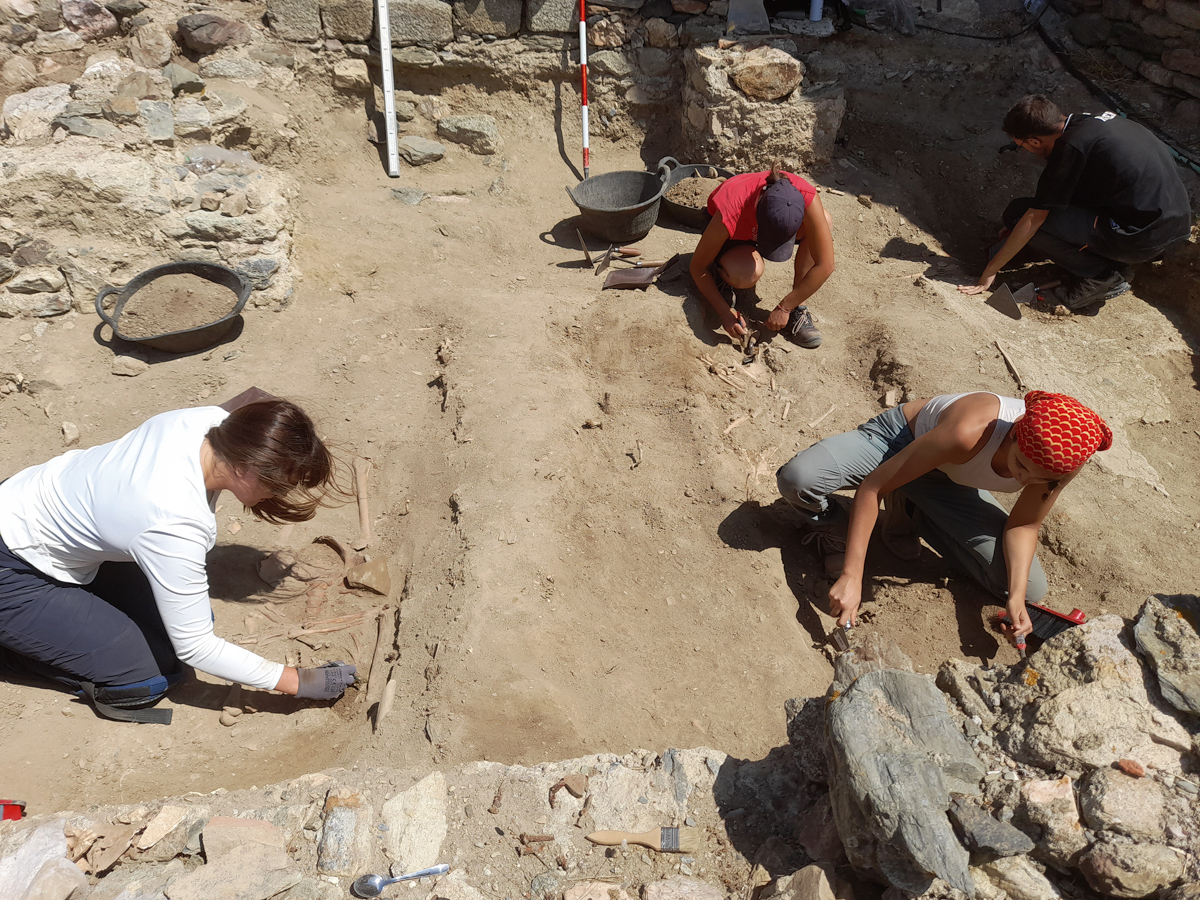
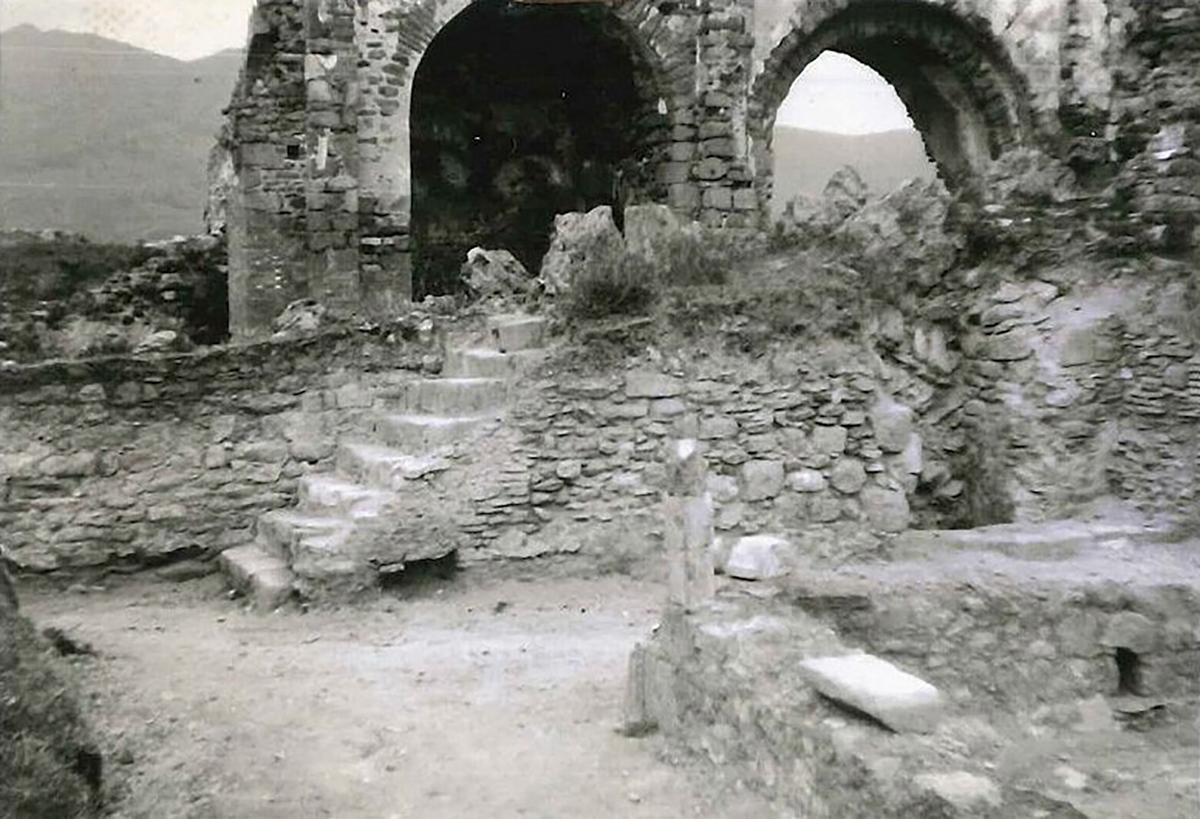
In the 17th-18th centuries, the monastic rooms were concentrated on the north and west sides of the courtyard and above the church, which was fortified. In the east, a circular oven is preserved inside a possible kitchen. At the beginning of the 18th century, a staircase was added on the south side of the complex, connecting this section with the lower part of the hill. The north wing was used throughout the 18th century as part of the parish cemetery.
Source: CRAPA.
Source: MAC-Girona.
Source: MAC-Girona.
| Parish Cemetery
The church fulfilled parish church functions, and the town’s cemetery was located around it. Although the original nucleus was located in the area of the monastery square, throughout the 18th century, it extended to other spaces such as the north wing of the cloister and the area of the west entrance gate to the church.
|