The visible remains of the Santa María church do not correspond to the building from the time of the monastery’s creation (10th century), but rather to an 11th-century construction. The church was consecrated in the year 1053. This does not mean that the entire building was finished by that date, since consecration only implies that the altar is already built and, therefore, mass can be held.
The current state of ruin is largely due to the bombardments of the late 18th century. The main apse, now reconstructed, collapsed in a fire in the 1930s. However, it is possible to discern the original structure of the church, built in the style known as “Early Romanesque Art”: three short naves covered with barrel vaults (semicircular), a wide transept (transversal nave), and an apse end opening into a central semicircular apse and two lateral absidioles. The west portal dates from the 12th-13th centuries. This was found fallen and was reconstructed during the recovery works of the building in the mid-20th century.
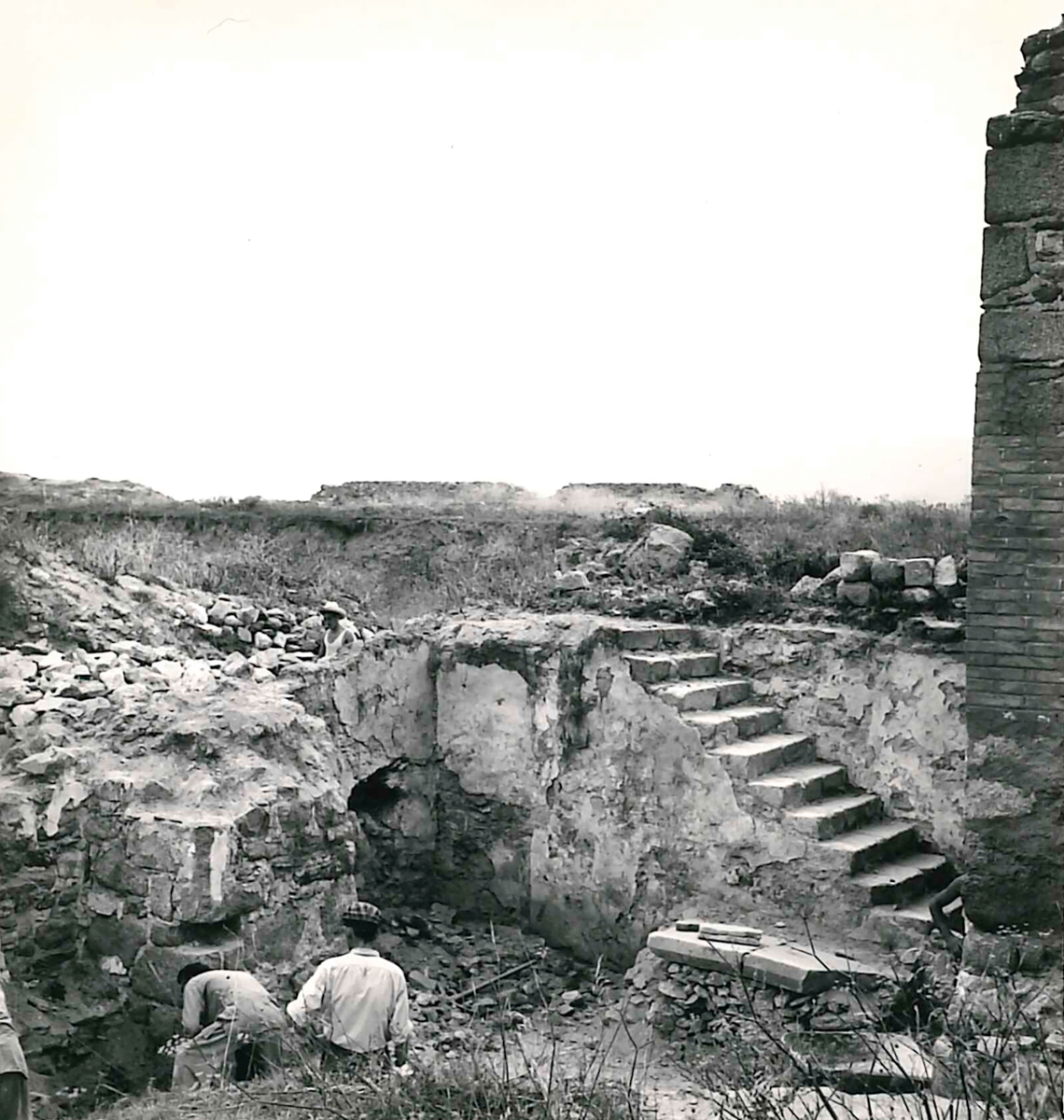
Source: MAC-Girona.
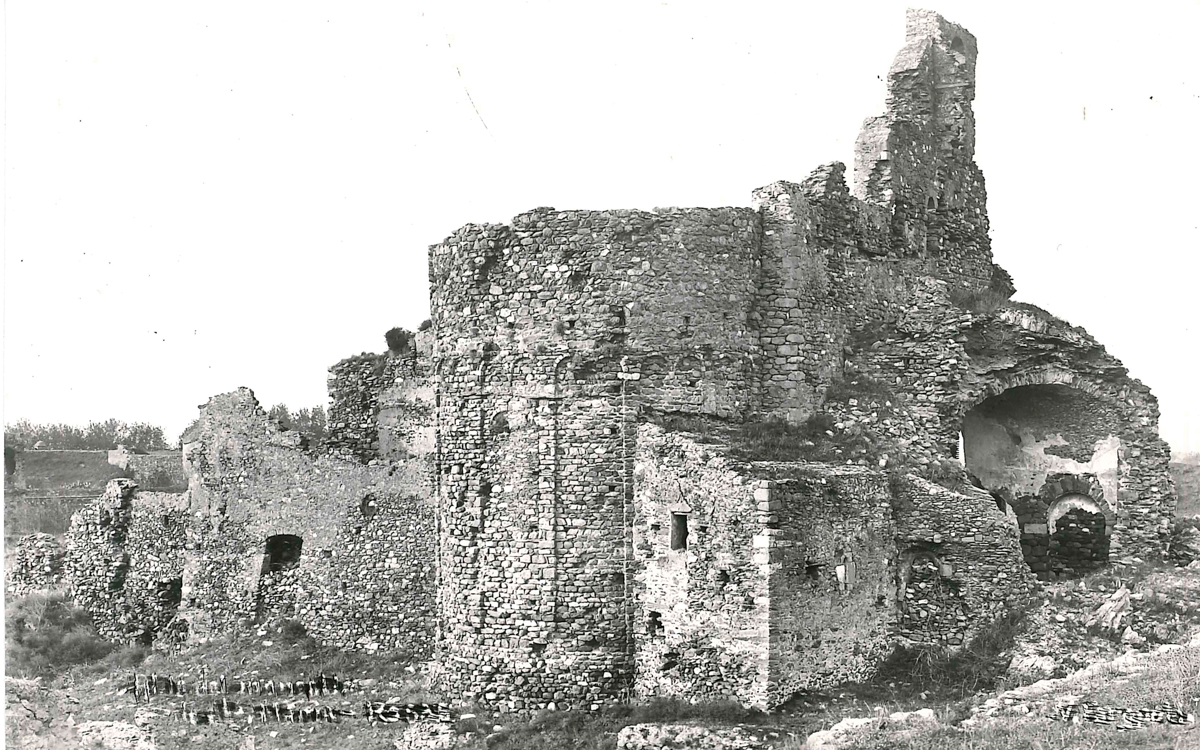
Source: MAC-Girona.
| The Capital
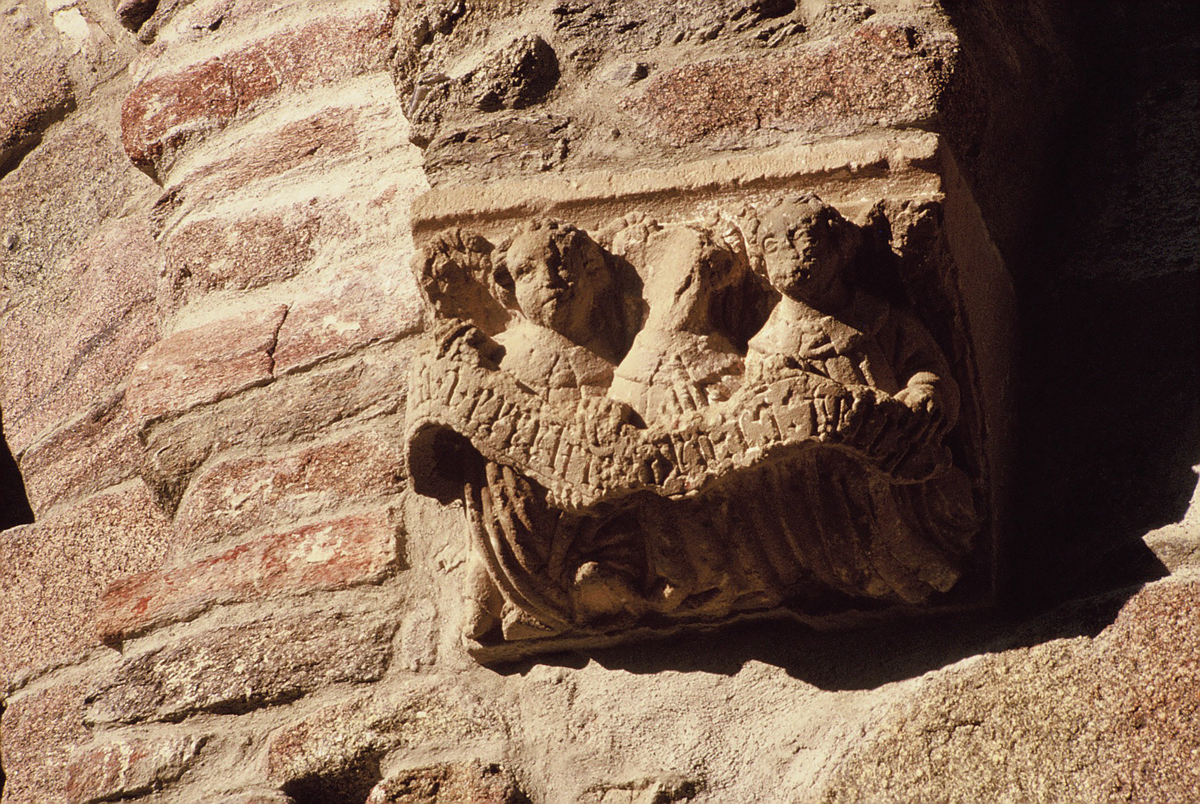
Almost nothing of the church’s decoration is preserved. The north capital of the triumphal arch, preserved in situ, stands out. Dated to the mid-15th century, it represents three archangels holding the text, written in Gothic minuscule script, of the hymn of the good news, based on the Gospel according to Luke 2:14: Gl(ori)a y(n) excelsis Deo et i(n) terra, which would have been completed in the south with a second capital and the inscription: et in terra pax hominibus bonae voluntatis.
|