
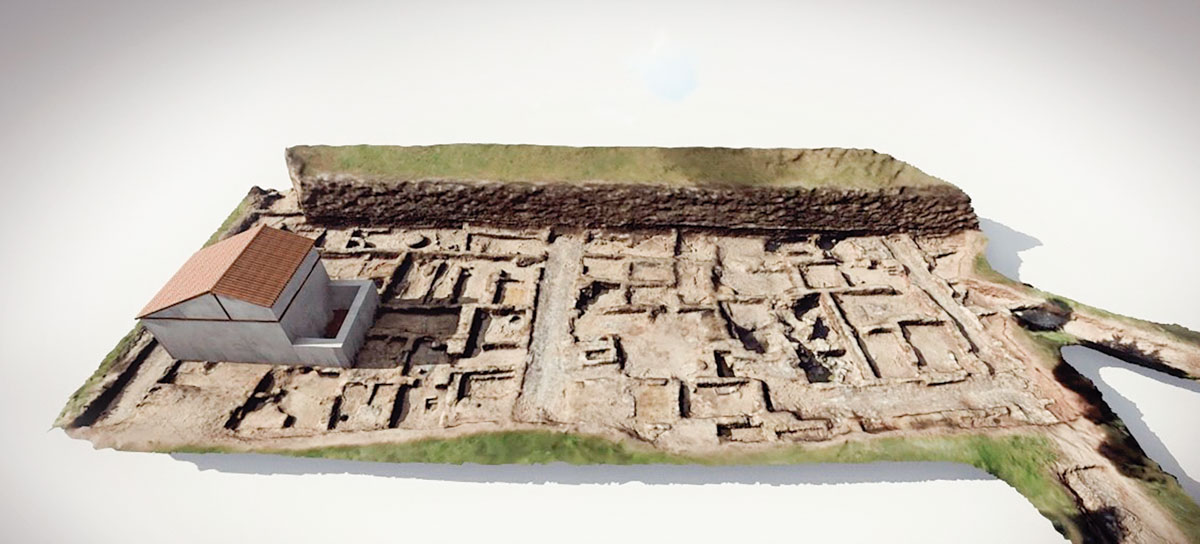
Once the different blocks of the town were defined, a series of theoretical, elongated plots were drawn, which normally went from street to street. The space was compartmentalized based on long walls that left an interior space between 4 and 5 meters wide (bays). This was the width that could be covered with wooden beams without the need for central pillars. This did not mean that every house occupied one of these plots. Some, larger ones, were the result of joining different bays, while others only occupied a part.
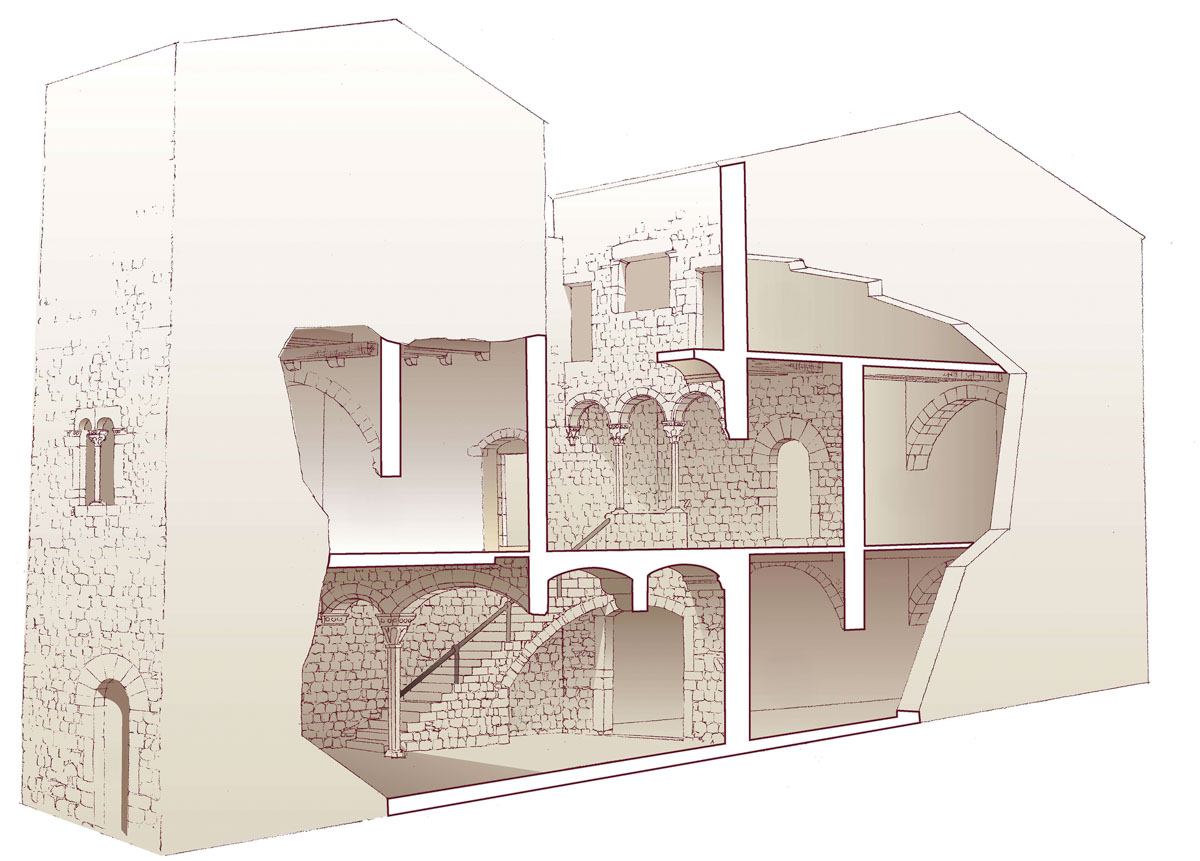
Normally, the basic house model was divided into two parts. In front was the workshop or shop, and the family rooms would be located on the upper floor. Behind there was an uncovered space that could be used as a warehouse, garden, or corral. Sometimes this part was sold to another owner who converted it into a small house, open to the back street.
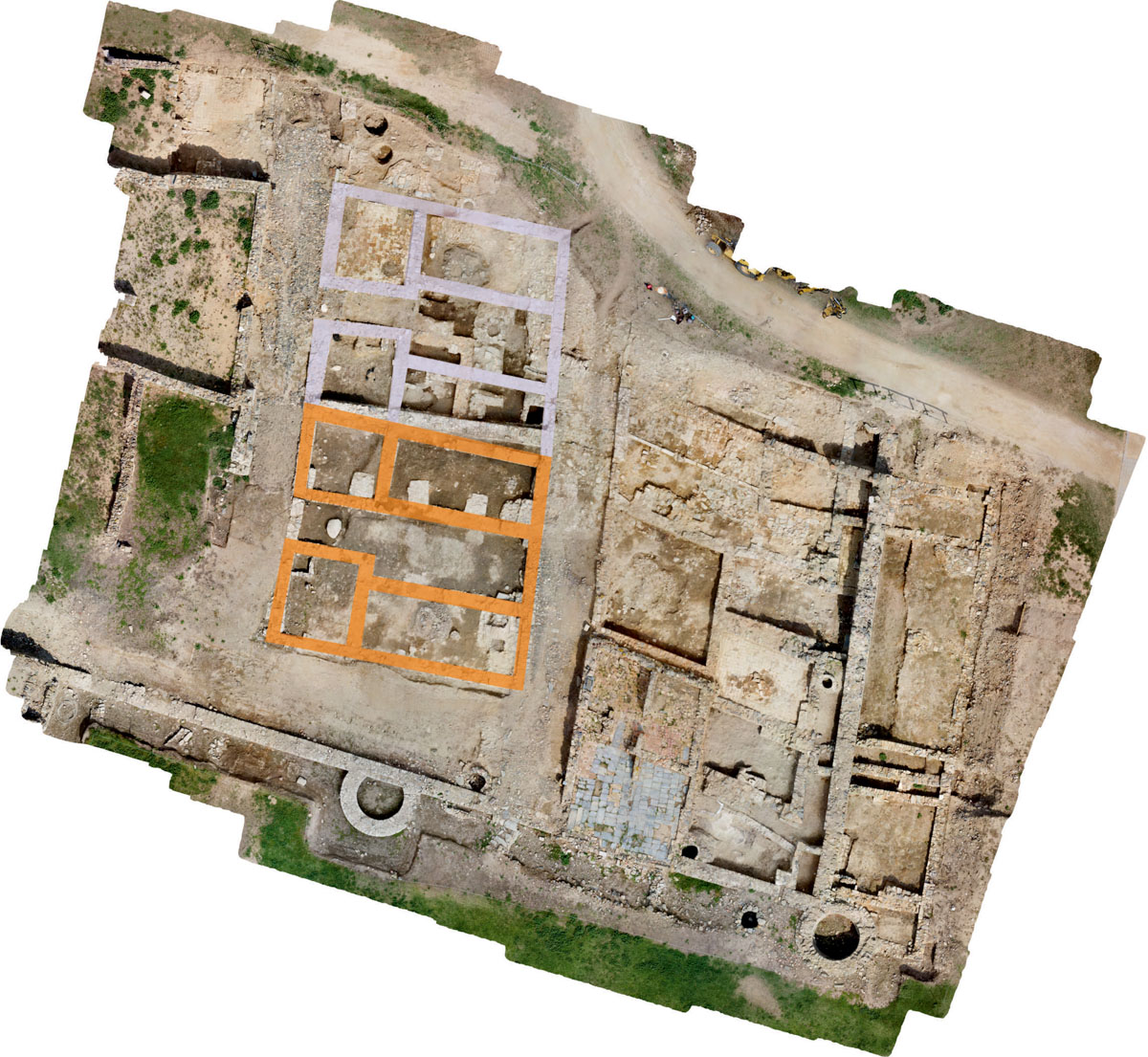
In the lower part of the Carrer Major, two large houses that join up to three of these plots are preserved. Both houses are identical, with a narrow vestibule, open to the Carrer Major, flanked by two quadrangular rooms. In the back part, there was a distribution space and two long naves. We know that in the mid-16th century, these houses were owned by the merchant Feliu Molera and the notary Pere Montserrat.
Source: CRAPA.
Source: B. Parès.
Source: J. Sagrera.