
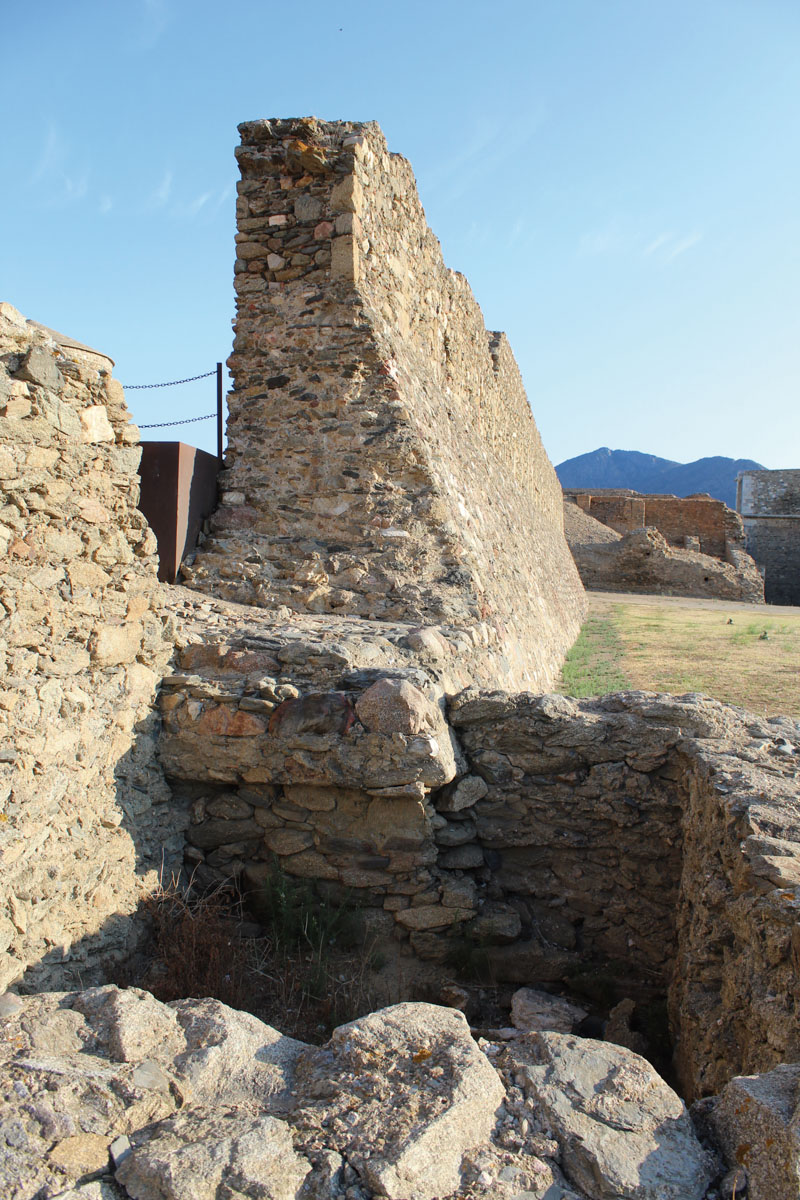
At first glance, one can see how the northern section of the medieval town’s eastern wall has different characteristics from the rest of the enclosure. In the medieval era, the construction of walls was based on the erection of very high and completely vertical walls to prevent attackers from climbing the defences . As from the 15th century, with the use of gunpowder artillery, which could destroy these walls, they began to construct walls with a scarp. In this constructive system, the outside wall presented an inclination with the aim of causing a “ricochet” of the projectiles that would reduce damage to the wall.
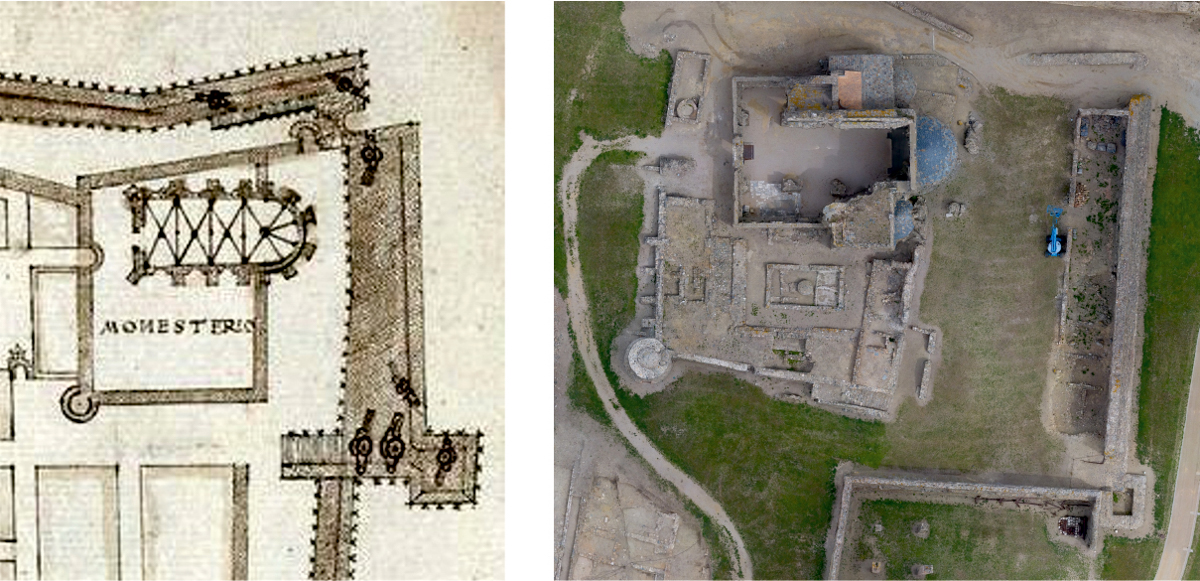
The northeast section was designed following this system, a fact that places its construction at least in the 15th century. A tower was built leaning against this section of the wall. This tower had a square plan, unlike the rest of the towers of the late-medieval wall, which are circular in plan. Its shape and dimensions allowed for the placement of artillery, which was not possible in the smaller circular towers.
The tower and the wall section probably form part of one of the defensive projects by the engineer Luís Pizaño, built in the mid-16th century with the objective of adapting the defences to the new artillery.
Source: CRAPA.
Source: Biblioteca Virtual Defensa-CRAPA.