
When building a fortification, its functionality must prevail over its architectural beauty. Despite this, in the modern era, the gates received a special treatment, with greater ornamentation, since this element had a propagandistic aspect. Emblems, inscriptions, and ornaments reinforce the message of power that is to be conveyed. In fact, the models of monumental gates were inspired by the triumphal arches of the Roman era.
The Sea Gate consists of a semicircular door set in a rectangular frame, flanked by four pilasters with a pseudo-Doric capital and an entablature. The entire structure is inspired by the forms commonly used in Roman-era architecture. The gate was built using limestone from the Montgrí area. On the sides, two openings (embrasures) allowed for the placement of weapons to defend the entrance.
Normally these decorative elements were financed by the local population, and the work was probably never finished, as it does not have any sculptural elements, which were common in this type of construction. The gates were usually crowned with an honorary inscription or a coat of arms that, in the case of Roses, if it ever existed, has not been preserved.
The Sea Gate provided direct access to the port area, and a defensive structure (barbican) was added later.
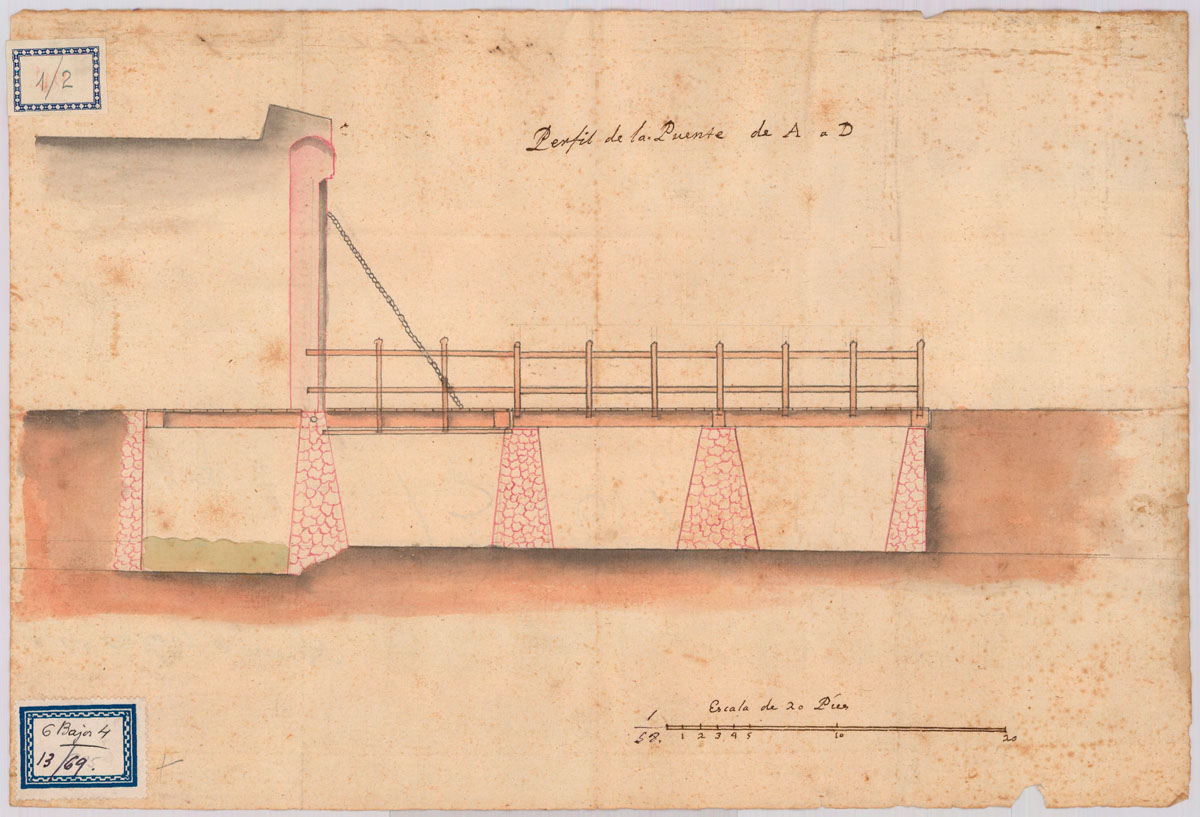
Source: Biblioteca Virtual Defensa.
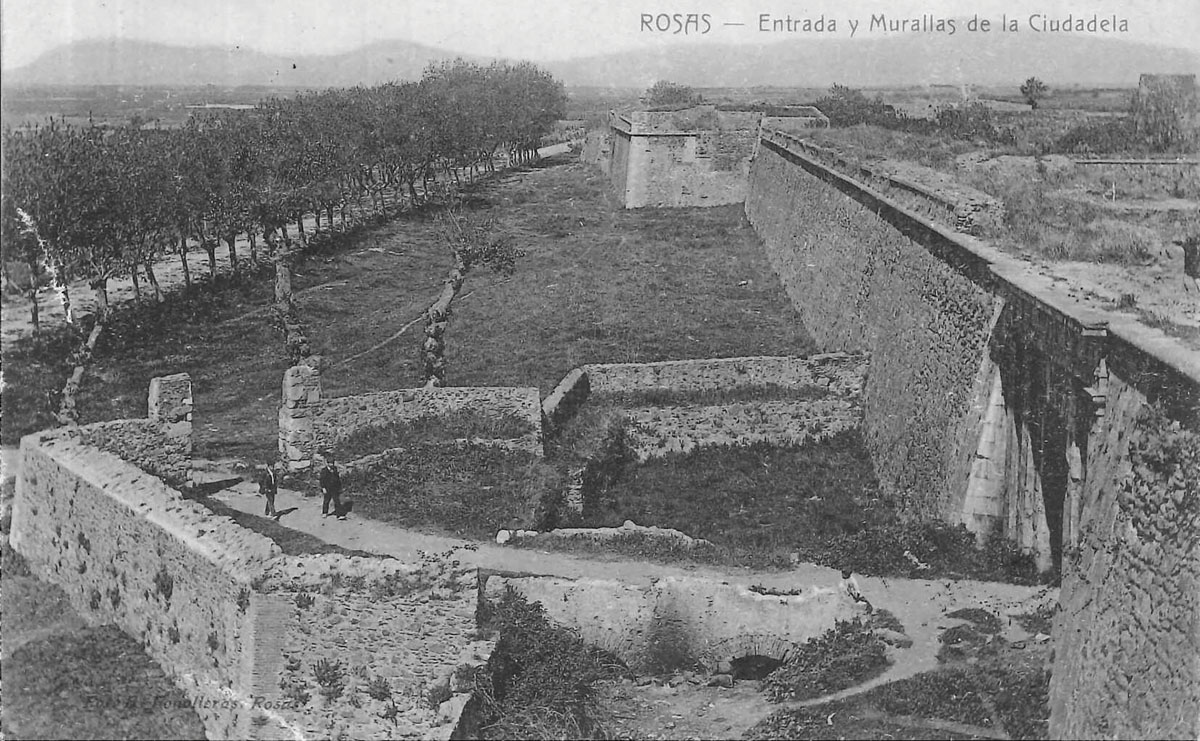
Source: Arxiu Municipal Roses.
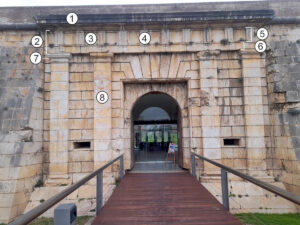
Source: CRAPA.