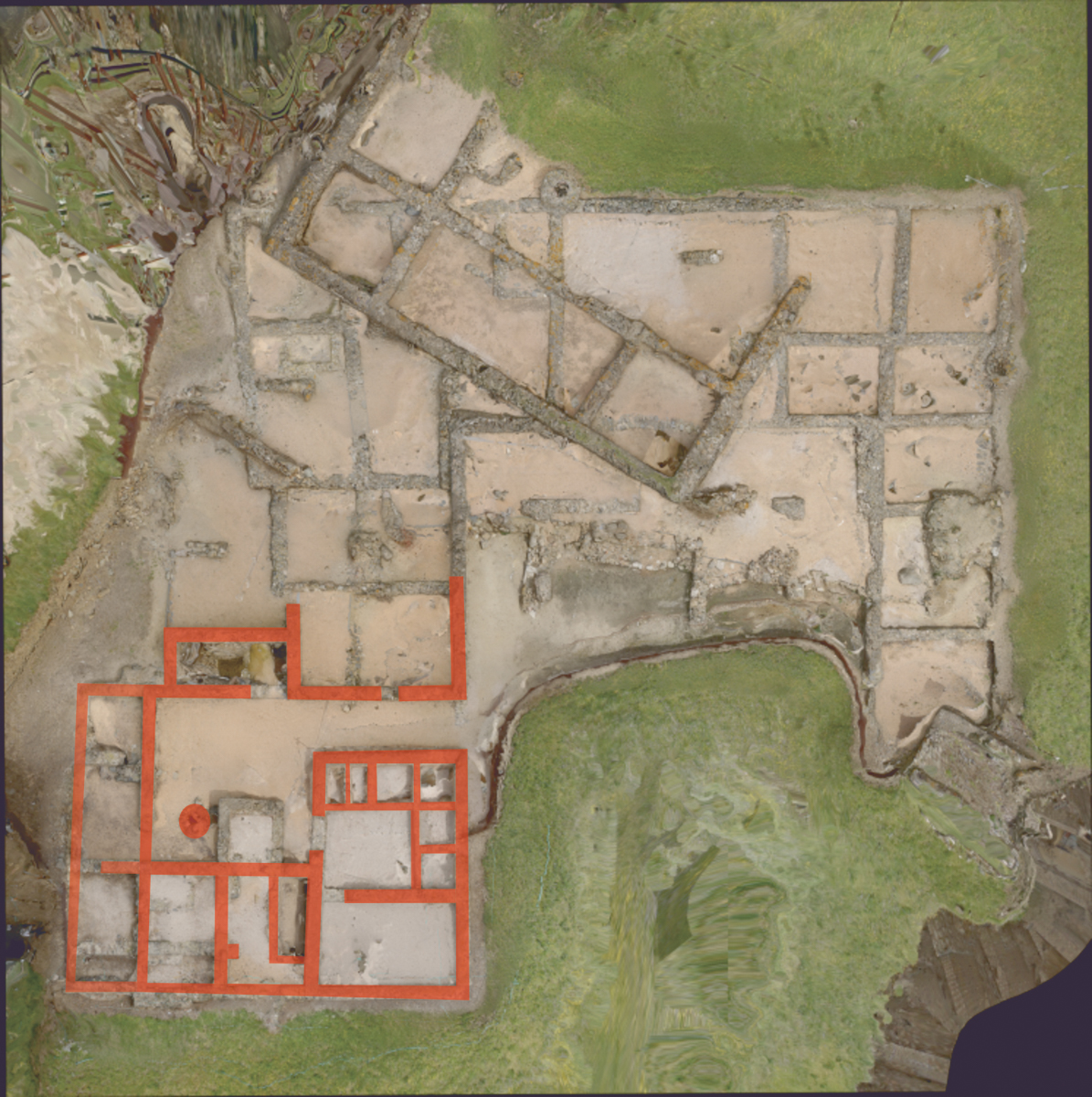
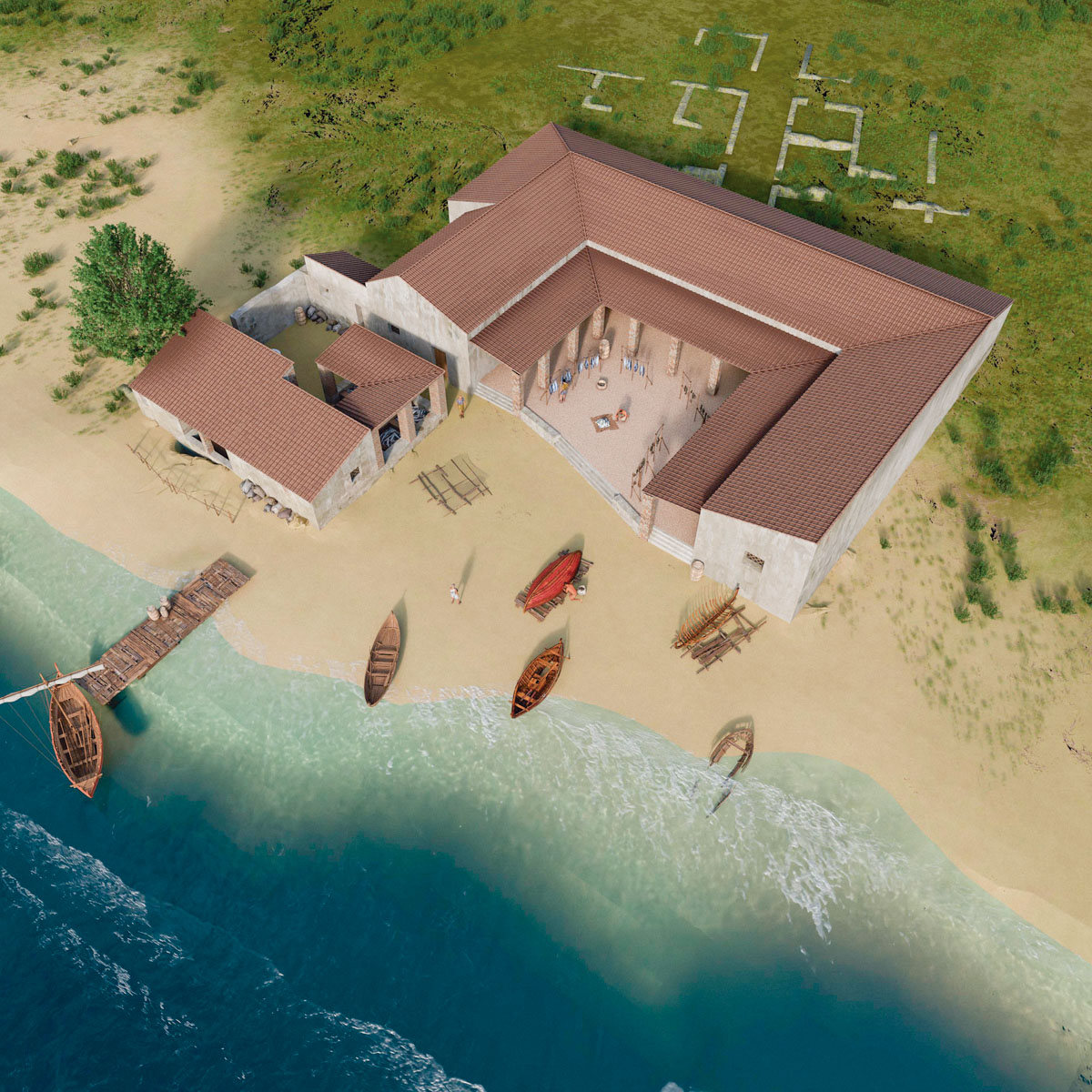
The thermal building and its surroundings were completely remodelled and reformed in the 4th century. A factory dedicated to the manufacture of fish products (sauces, preserves, etc.) was built, occupying the entire south wing. This factory used spaces from the old thermae, transforming some of the old bathtubs into fish processing tanks and extending the building eastward. The central space of the factory is a quadrangular room with five tanks where the fish, once chopped, was left to macerate and was preserved in salt-saturated water (brine). Subsequently, the product was packaged in amphorae for sale . The fish remains found in the factory confirm this salting activity, using mainly tuna, but also other species, such as dolphin.
In Roman times, fish sauces, such as garum, as well as various types of salted fish, constituted essential elements in the diet and were widely traded throughout the Roman territory. These factories extended along the entire Mediterranean coast, concentrating in some points, such as the large factories that have been documented on the coast of present-day Andalusia.
The activity of this factory lasted at least until the end of the 6th century CE, although it underwent a reduction in space and probably in production. In fact, a part of the salting factory was abandoned approximately one hundred years after its construction, and some areas used for burials have been found.
Source: CRAPA.
Source: D. Vivó.
| The Coins
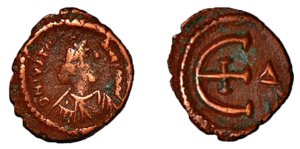
Excellent evidence of the commercial activity of Roman Roses, as well as of this port building, is the large number of coins that have been found. In total, archaeological excavations have documented more than 800 coins dated between the 4th and 6th centuries on the Citadel site. Practically all of them are bronze coins, that is, the currency of a lower value and the most used in daily exchanges. Most of these pieces are concentrated inside the port building. It should be noted that the most modern coins that can be reliably dated are two Byzantine pieces (first half of the 6th century) minted by Emperor Justinian I.
|