
For the moment, archaeological findings have not been able to clarify whether the original (11th century) town already had defences. What is certain is that in the 14th century, the town was provided with powerful walls that completely surrounded it, leaving out only the port and the fishermen’s quarters (to the south). It was a long and costly work. Currently, only the eastern and southern sections, as well as the interior face of the western wall, used as the limit of the Citadel defence slope, are visible. The wall presents slightly different construction techniques depending on the section. Some sections are built with a single wall, one metre wide. In contrast, in the eastern area, the wall is double, formed by the union of two walls half a metre wide each. It was built this way to adapt better to the slope of the terrain, since the exterior face had to penetrate deeper, as the depth of the exterior moat had to be added. In the south, where the terrain was softer, composed of beach sand, it was necessary to build wider and deeper foundations.
The walls had circular towers, and small long and narrow openings (arrow slits) that made it easier for defenders to shoot with bows and crossbows.
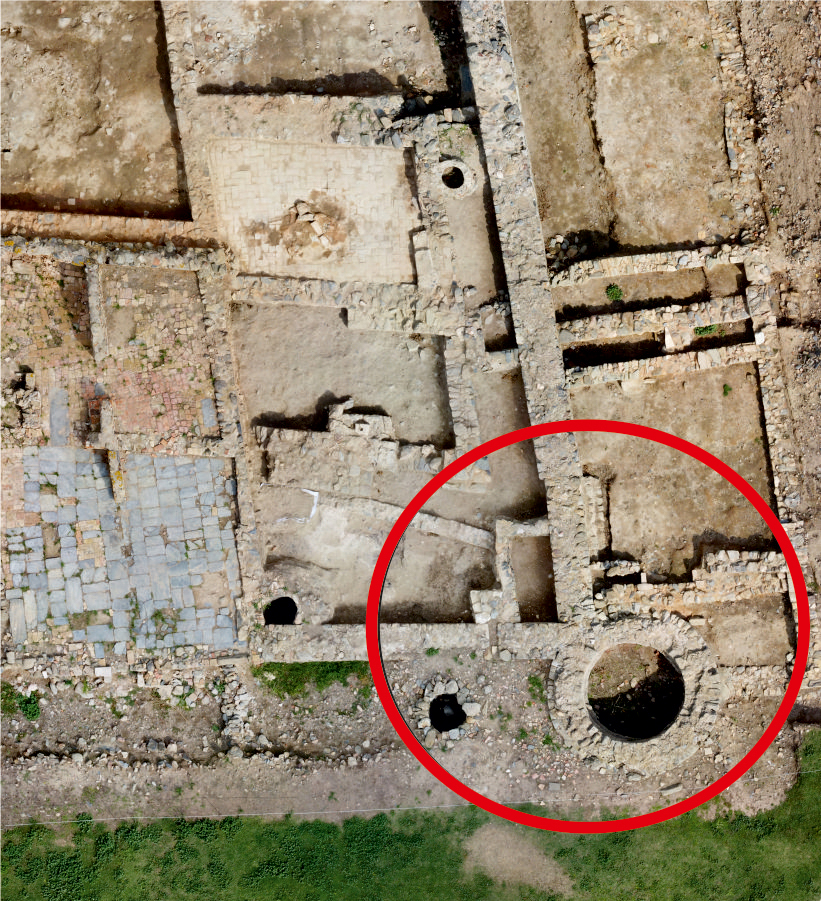
Source: CRAPA.
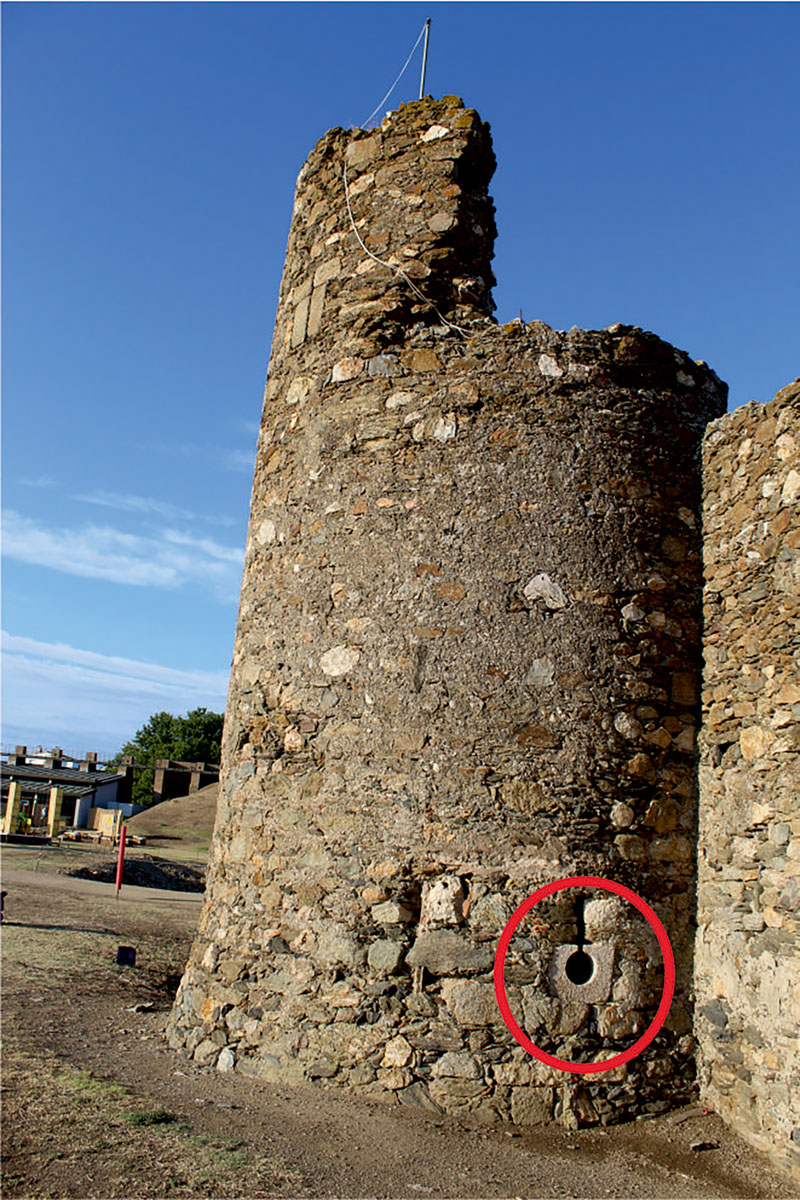
Source: CRAPA.
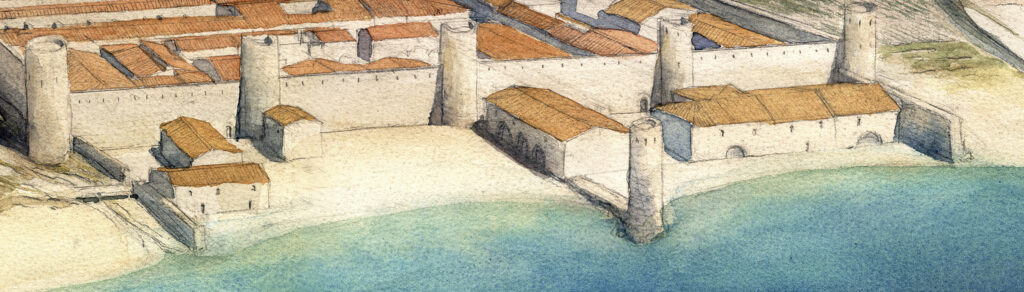
Source: J. Sagrera.