
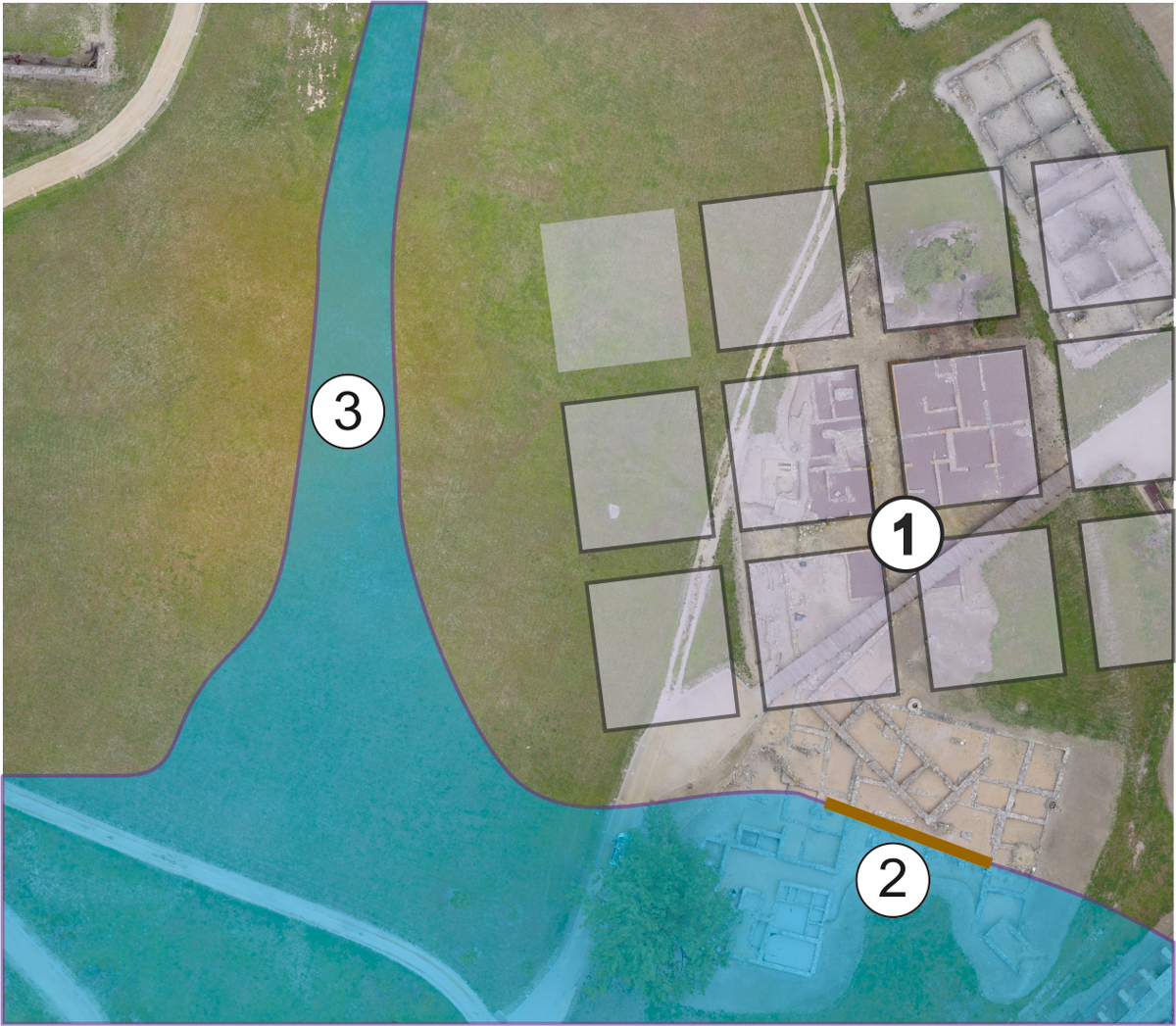
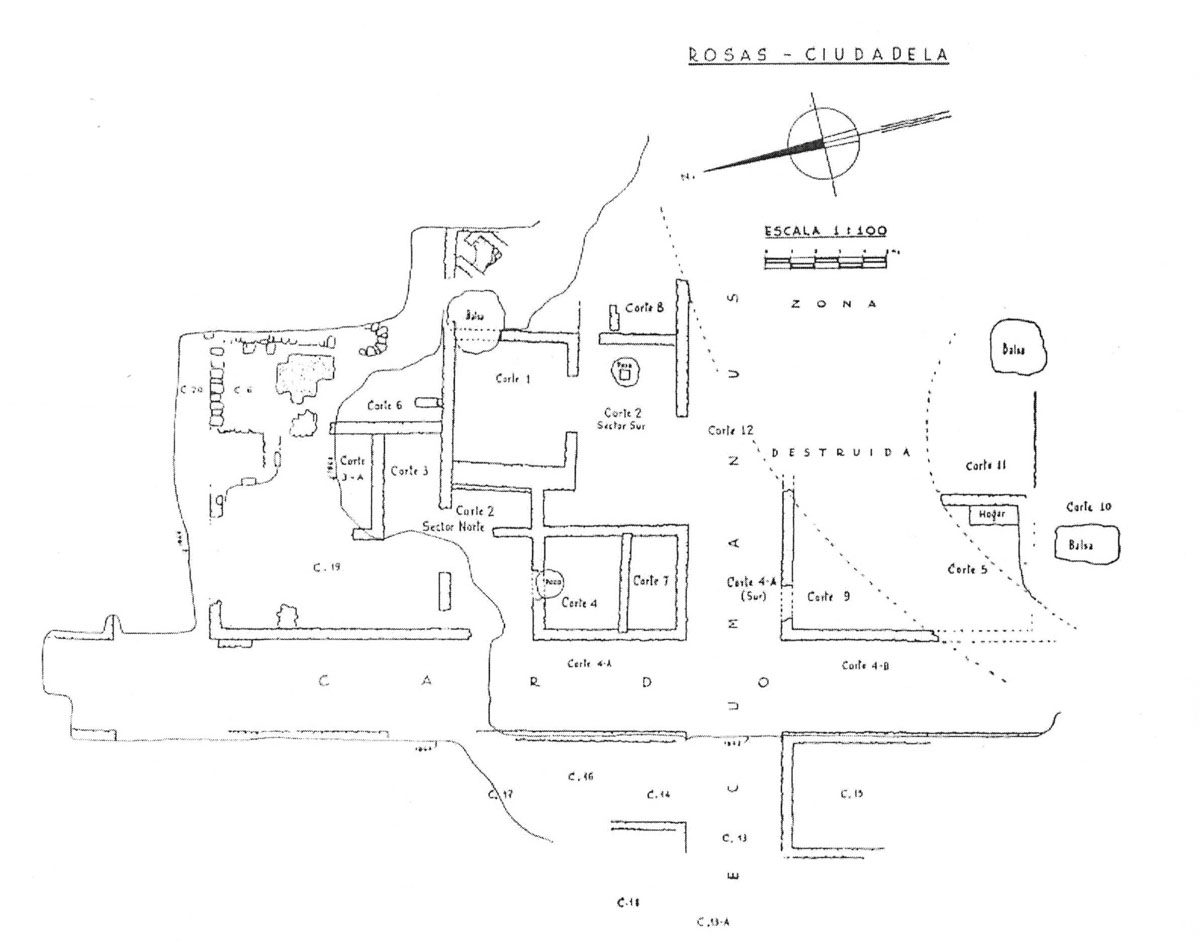
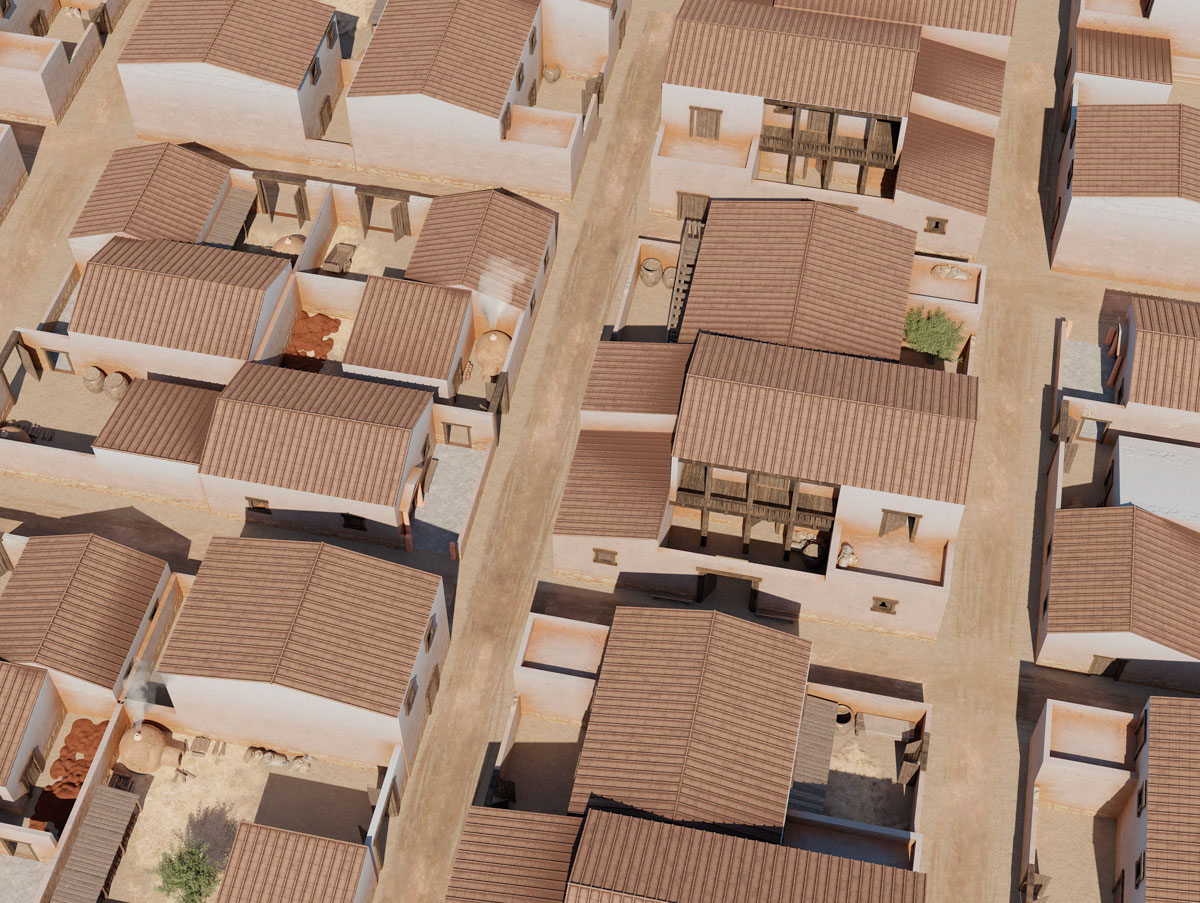
The area known as the Hellenistic Quarter represents an expansion of the Greek population of Rhode that took place from the beginning of the 3rd century BCE. It is a residential section located in the port area and east of the Rec Fondo stream, with a predominantly artisanal and commercial activity. It has a perfectly regular structure, with quadrangular blocks of houses and rectilinear streets that cross at right angles (Hippodamian model). The streets are oriented north to south (plateia) and east to west (stenopoi).
Each block of houses was divided into different plots, but with houses of different sizes. While one block is occupied by only two houses, six have been documented in another. In total, the excavations have made it possible to identify up to eleven different houses.
Some of the houses had workshops, especially dedicated to the manufacture of black-varnish and clear-paste ceramics, which constituted one of the main products manufactured and exported from Rhode. There are also remains of a metallurgical kiln that shows the manufacture and commercialisation of metallic products.
Source: CRAPA.
Source: MAC-Girona.
Source: D. Vivó.